On the recent October Cairngorms trip I described in my last post Tony Hobbs did an interview with me about the gear I was using. This should be on YouTube soon. I’ll post a link when it appears. In the meantime this is a gear and trip piece about an overnight Cairngorms trip I did last October. It first appeared in The Great Outdoors magazine. I’ve done some minor editing and updated prices.
Glen Feshie in the Cairngorms is special at any time of the year but especially in the autumn. The colours are spectacular, the air is crisp, the haze of summer is over, the midges gone.
This trip I walked down the glen, camped in the mouth of the side valley called the Slochd Mor, and then climbed 857-metre Carn Dearg Mor, an isolated Corbett.

The early afternoon rain had stopped and the sun was breaking through the clouds as I set off along the glen. There was just one more brief shower. which ended with a rainbow curving over the hills. Birches in their bright yellow autumn raiment stood out against the dark pines.
Leaving the main glen I turned into the Slochd Mor and camped out in the open, away from the forest. The sky was still cloudy but soon cleared as the almost-full moon rose. Jupiter shone brightly but the moonlight was too bright for many stars to be visible. I spent several hours outside, relishing the beauty and peacefulness, and left the tent door open overnight so I could look out to the sky whenever I woke. The night was quiet, the silence broken just once when a skein of geese called loudly as they raced overhead.
The overnight temperature didn’t quite reach freezing. I woke to a tent soaked inside and out with dew and condensation. The gentle breeze at dawn was strengthening as I set off and I wasn’t far up the Slochd Mor before I needed my shell jacket, the now strong wind funnelling down the steep-sided narrow ravine.
At the top of the glen I turned towards Carn Dearg Mor. The map showed a path and a track leading up to the ridge. They barely existed. The hillside here has been planted with saplings as part of landowner Wildland’s plan to restore the Caledonian Forest. The traces of overgrown tracks I found suggest these were fading long before this recent planting. The walk up the hillside isn’t difficult anyway.

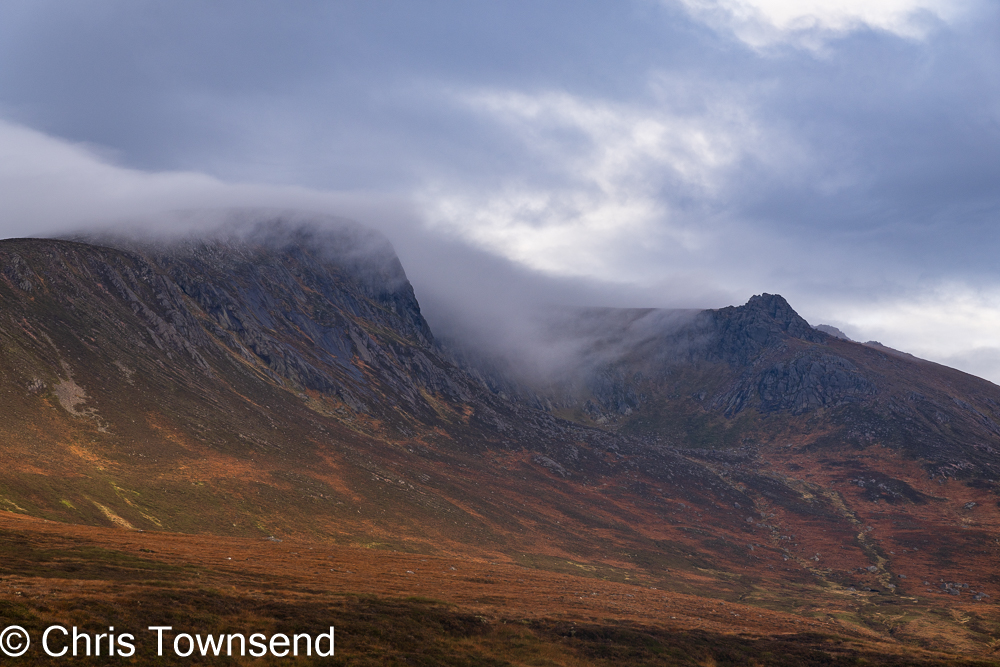
On the ridge I joined a rough vehicle track that led to the little pile of stones marking the summit of Carn Mor Dearg, the fierce wind driving me along. The views are extensive from this isolated hill. To the west clouds shrouded the summits. Across Glen Feshie the Western Cairngorms were dark and sombre. High above a golden eagle drifted in the wind.
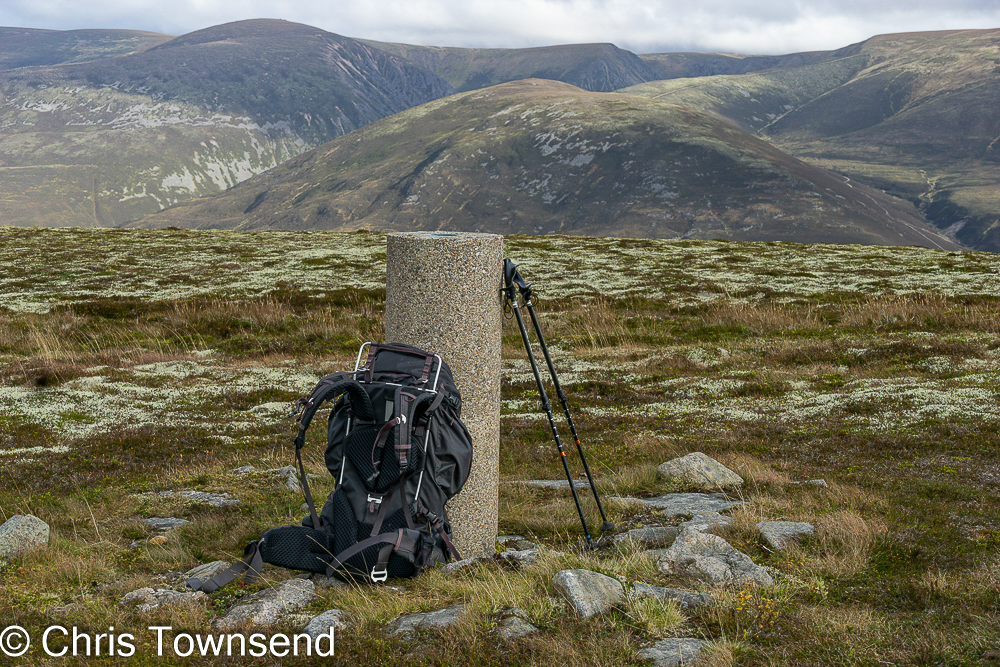
The broad ridge descending slowly to Carn Dearg Beag was a delight with easy walking and splendid views. Surprisingly this top has a trig point unlike the higher Carn Dearg Mor.

I descended from the ridge directly into Glen Feshie, wanting to walk through the bright autumn colours I could see below. Tussocks and deep heather made for quite arduous walking here and I stumbled in hidden holes a few times. The forest was worth the effort though, ablaze with gold and yellow. Some of the big old birches were breathtakingly magnificent.

PLANNING & PREPARATION
Glen Feshie was familiar terrain but I hadn’t been up Carn Dearg Mor for many years and could remember little about it. The map didn’t suggest any difficulties. Whilst the forecast wasn’t for wintry weather I took gear I knew would be adequate if conditions worsened. Longer nights meant more time in camp and possibly walking in the dark so I took two headlamps (easier to swap them over than change batteries) and enough clothing to keep me warm if temperatures dropped below freezing. I swapped the trail shoes I’d be wearing all summer for boots and added warmer clothing, including thick gloves and hat, to my pack. I did save a little weight as out, thankfully, went midge repellent, mosquito coils, and head net. I’ll be happy not to see those again until next summer. Knowing I might be spending twelve hours or more in the tent if the weather was stormy I chose a roomy shelter, saving a little more weight by not bothering with an inner tent, again not needed when there are no midges or likelihood of snow.
EQUIPMENT
Klättermusen Ymer Pack 2.8kg £509 ****

- Likes comfort, pockets, recycled fabric
- Dislikes heavy, expensive
- Capacity 75+15 litres
- Materials Retina®, Econyl® – 40% Polyamide, 30% Post-Consumer Recycled Polyamide, 30% Pre-Consumer Recycled Polyamide, 400D, 251 g/m²
- Closure detachable lid, L-shaped front zip, zipped bottom
- Back System external aluminium frame, harness adjustable in height and width
- Hipbelt pivoting, dual-density foam
- Pockets external lid, internal lid, 2 zipped side, mesh side water bottle, 2 hipbelt
- Features front and top bungee cord, front and top attachment webbing, side straps,
- Size adjustable fit, body back length 42 - 54 cm.
- https://www.klattermusen.com/
External frame packs just about disappeared over thirty years ago so I was surprised when I was offered one to test earlier this year. The last time that happened was in 1987! The Klättermusen Ymer is a huge pack designed “for longer treks and hikes with a heavier load” and as well as the external frame has a thickly padded hipbelt, lumbar pad, and back pad. I first tried it in the winter with a very heavy and unwieldy load including snowshoes and an Icebox igloo-building tool and found it as good as could be expected floundering through boggy tussocks and patches of soft snow before I could use my winter tools. I didn’t think that was really a fair trial though and wanted to use it on a normal backpacking trip before reviewing it.
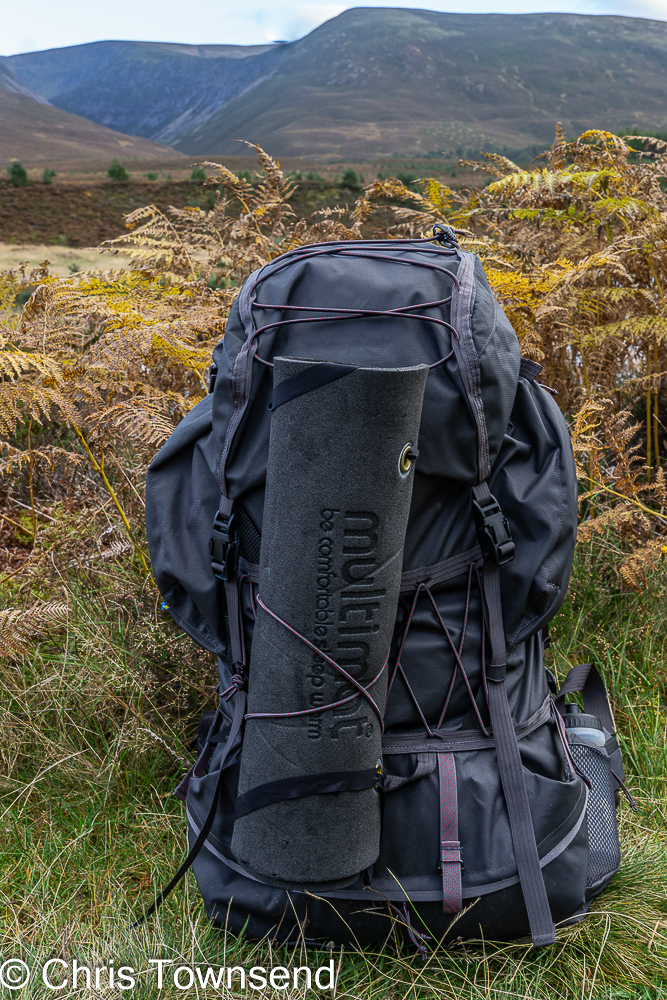
This first autumn trip required enough gear to justify using it, though it wasn’t full. Comfort was good as was stability on the rougher terrain. There are plenty of pockets and I liked having zipped side ones rather than open-topped mesh. For big heavy loads and long trips this is a good pack. It’s made from recycled fabric too. It is heavy and expensive but it should last well.
Bach Wickiup 3 tent 1300 grams (with groundsheet) £720 **** Recommended

- Likes roomy, stable, light (without inner)
- Dislikes expensive, not available without full-size inner
- Flysheet siliconized ripstop nylon
- Pole TRX Eco Duralumin Jumbo 6 19.5
- Dimensions 275cm x 220cm, 155cm high point
- https://www.bach-equipment.com
The Wickiup 3 pyramid tent has been a favourite since I first used it seven years ago. Back then it was branded Nigor. That company has since been taken over by Bach Equipment. The Wickiup 3 hasn’t changed however. I especially like this tent when the nights are long as it’s very roomy.
The Wickiup 3 comes with a full-size inner, which pushes the weight up to 1920 grams, and is designed to sleep 3. There is a 550-gram half-size inner tent for solo use available as an extra. I use this in midge season. Otherwise I just take a silnylon groundsheet, which keeps the weight down to a reasonable 1300 grams for solo use. The groundsheet can be moved around according to the weather too – at the back of the tent away from the door if it’s stormy, angled into the door if it’s calm. I did the latter on this trip, enjoying the views.
Stability is excellent – it has stood up to some big storms over the years – and it sheds snow easily. I didn’t need it for either of those this time but the space was welcome.
The cost is high but it should last well and it is versatile.
Sierra Designs Cloud 20 sleeping bag 875g £300 ***** Best Buy

- Likes lightweight, comforter design, foot vent
- Dislikes expensive
- Fill 800fp DriDown
- Shell 15D nylon ripstop
- Construction box wall
- Zip no
- Length regular 198cm, long 213cm
- Rating comfort -3C, comfort limit -10C
- https://sierradesigns.cm
This sleeping bag has become my favourite in recent years because of the comfort and versatility.
There’s no zip but the bag still opens wide at the top as there’s a wrap-around comforter than runs over the top half of your body. You can easily wrap this round you for warmth or open it up to cool down. It combines the protection of a sleeping bag with the freedom of a quilt better than anything else I’ve used. I just love being able to fling the comforter aside and sit up and not have to fumble for a zip or a drawcord toggle. On the bottom there’s a large uninsulated sleeve designed for a sleeping mat. I don’t use this as it restricts movement. I find the bag roomy enough that I can move inside, and it stays under me. On this trip the temperature fell to 2° and I didn’t need to close the hood to stay warm. In previous reviews I’ve said the Cloud is one of the most comfortable bags I’ve ever used. It’s not. It’s the most comfortable bag I’ve ever used.
Optimus Vega stove 180g £105 ***** Best Buy

- Likes lightweight, pre-heat tube, inverted canister support
- Dislikes nothing
- Fuels butane/propane
- Burner diameter 4.5cms
- Pot supports width 14.5cms
- Power output 3700 watts/12,624 BTU
- https://www.katadyngroup.com
This stove has been a favourite for cold weather use for many years. It can be used with an inverted canister, which works better in the cold as liquid fuel is fed to the burner where it is turned to gas via a preheat tube that runs through the flame. The Vega has flip-out legs to hold the inverted canister in place. I wasn’t expecting very cold temperatures but I did have a partially used canister of Primus Summer Gas to use up. This is designed for 15 to 40°C and it certainly wasn’t going to be anywhere near that warm. As it was the stove was sluggish until I inverted the canister so it was a good choice.
The low-profile makes the Vega very stable. It’s compact when packed as the combined pot supports and legs curve in round the burner. There’s no built-in windshield but it comes with a separate foil windscreen. The weight is low for this type of stove.
BOOTS
Keen Circadia Mid WP 1.28kg (9) ***1/2 £115

- Likes fit, grip, breathability, cost
- Dislikes forefoot cushioning doesn’t protect against stones
- Uppers leather/fabric
- Midsole air-injected high-density foam
- Outsole Keen.Fusion rubber
- Sizes 6.5-14
- https://www.keenfootwear.com
Keen says the Circadia Mid is a simplified version of the well-proven Targhee boots designed for “beginner outdoor adventurists”. In use I couldn’t tell the difference between the two boots except in the case of the midsole. With the Cascadia I could feel stones through this. I can’t with the Targhees. On this walk I wasn’t on stony ground much so it wasn’t a big issue and otherwise the boots were fine.
The fit is typical Keen with a wide toebox and a narrow heel, which just happens to be right for my feet. The uppers are leather with fabric inserts. Inside there’s a waterproof membrane. In the mostly cool conditions of this trip breathability was good. The terrain varied from forest tracks to steep boggy moorland and wet grass. The grip was fine throughout. The toe bumper is big and hard, which was useful on the descent when I kicked a few rocks hidden in the heather. Overall the comfort was excellent.
These are good boots at a good price. I prefer the Targhees though, simply for the underfoot cushioning.
CLOTHING
Keela Talus synthetic insulated jacket 570g (L) £145 ***1/2

- Likes hood, cost
- Dislikes weight, bulk, fleece side panels
- Shell ripstop nylon
- Insulation 60gsm Primaloft Gold, stretch-fleece side panels
- Hood adjustable, wired peak
- Pockets 2 handwarmer, 1 chest, 1 inner
- Cuffs elasticated
- Sizes men XS – 3XL, women 8-20
- https://keelaoutdoors.com
Expecting a chilly night and hoping to spend some time outside if the sky was clear I wanted an insulated jacket that would keep me warm standing round star watching. The Talus was a test jacket I hadn’t worn before but I was pretty sure it would be warm enough due to the Primaloft fill. It was too, keeping me comfortable over a thin fleece and base layer. I don’t think it’s one for temperatures well below freezing but in the ones just above zero on this trip it was fine.
The design is fairly standard for an insulated jacket. The best feature is the hood, which is adjustable and has a wired peak, far better than the simple hoods found on many similar jackets. The handwarmer pockets are cosy but cut off by a pack hipbelt which wasn’t a problem as I didn’t wear the jacket while walking. The chest pocket is smartphone rather than map size, again not an issue on this occasion. Also not an issue but it could be on other trips are the fleece panels on each side as these aren’t windproof. They are thick, warm, and very breathable but I’d rather have a jacket that was completely windproof.
The Talus kept me warm and I liked the hood. The price is low too. It’s quite heavy for the warmth provided and bulky when packed though.
Berghaus Paclite Dynak Jacket 355g (L) £180 **** Recommended

- Likes lightweight, hood, cost
- Dislikes no chest pockets
- Materials 2 layer polyester/Gore-Tex Paclite
- Hood adjustable/stiffened peak
- Front Closure water-resistant zip with inner flap
- Pockets 2 handwarmer
- Hem drawcord
- Cuffs Velcro
- Sizes men XS-3XL, women 8-18
- https://www.berghaus.com
The Dynak is a lightweight waterproof jacket at a good price. The design is basic but functional. It’s not a full winter jacket but it is more substantial and a little stiffer than many other lightweight jackets. I thought it would be ideal for this autumn walk when I wasn’t expecting wintry weather but rain and wind were likely. In fact there was only the occasional short shower and I didn’t really need a waterproof jacket for that. However the wind on the second day was cold and strong and the Dynak did a great job of keeping it out and also proved quite breathable.
The hood gives better protection than many on lightweight waterproofs and has a peak stiff enough not to deform in the wind. The pockets are clipped by a hipbelt but still usable. I would have liked a chest pocket but that’s a minor complaint. There are no underarm zips but the adjustable cuffs are quite wide.
BAM Newal Bamboo Walking Trousers 575g (36) £79 ***1/2

- Likes comfort, pockets, environmentally friendly
- Dislikes slow drying, heavy
- Fabric 350gsm 65% organic cotton/33% Viscose bamboo’2% Elastane
- Pockets 2 open hand, 2 zipped cargo, 2 open rear
- Waist belt loops
- Sizes men 30-38
- https://www.bambooclothing.co.uk
I have mixed feelings about these trousers. They are very comfortable and pleasant to wear. But they also soak up moisture and are slow to dry, as you’d expect, given they’re made from cotton and viscose, both very absorbent materials. This was the first overnight trip with them and the legs did get wet setting up camp as there was plenty of damp vegetation around the site and I did kneel on the wet ground a few times. The next day when I put the trousers on the wet areas felt cold though they soon warmed up and once I was walking eventually dried in the wind. I think overtrousers would be needed more often than with quick-drying trousers in showery weather. I wouldn’t wear the Newals again if much rain was likely.
The trousers are also quite heavy and warm. On hot days I’d quickly overheated in them. On this trip they were ideal. My legs never got sweaty or cold. The fabric isn’t fully windproof – I can blow through it with a little effort – but it was adequate for the cold wind high up.
I like the open hand pockets – no zips to grate on cold hands – and the cargo pockets are useful. The fabric has a slight stretch so they move with you. The fit is quite loose anyway.


Photographic note: images taken during the trip with the Sony a6000 camera and Sony 18-135 and 10-18 lenses, and the OPPO Find X5 Pro smartphone