Monday, 27 December 2021

My Favourite Wild Camps of 2021 In Pictures

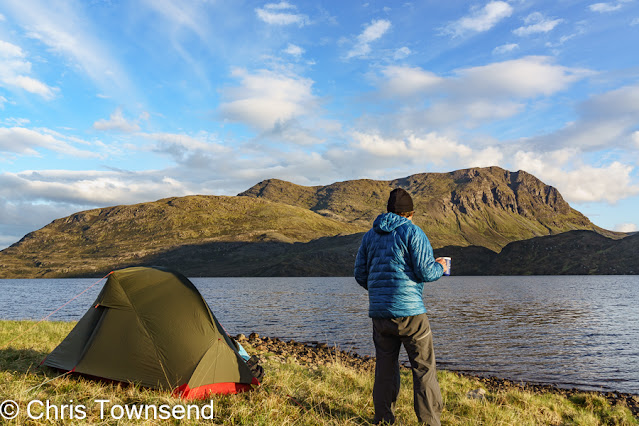
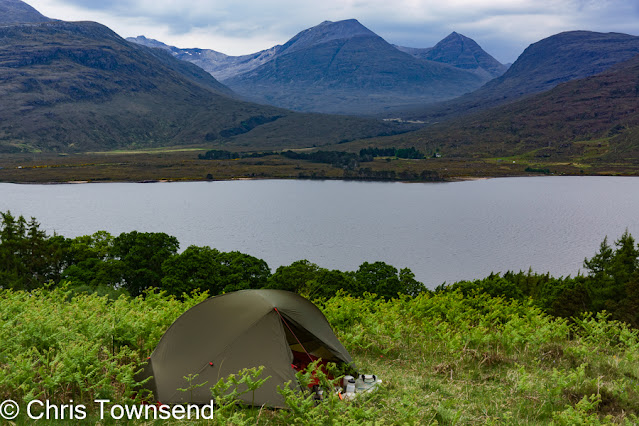
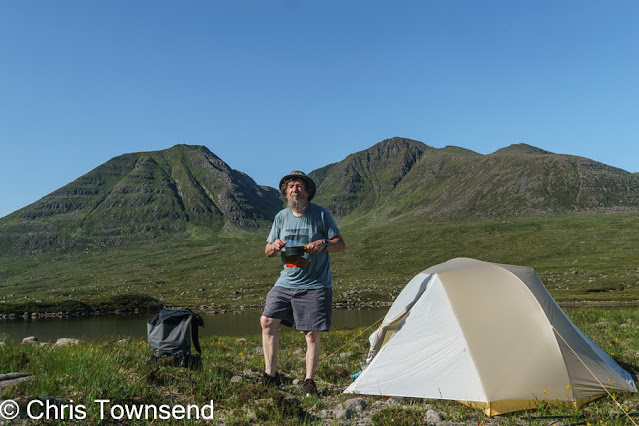
View over Lochan Fada to Slioch, evening June 4

For the second year running there were no long walks. Four days was the maximum. I never left the Highlands either. Indeed, Glen Feshie in the Cairngorms was the southermost place I reached. Most of my trips away from the Northern Cairngorms were to the north and west. I made no plans to leave Scotland. With Covid restrictions at home and abroad constantly changing I decided it was simpler and less frustrating to stay at home.I did have many splendid camps, especially in the early summer when there was a long spell of dry clear weather. Here are pictures of my favourites.

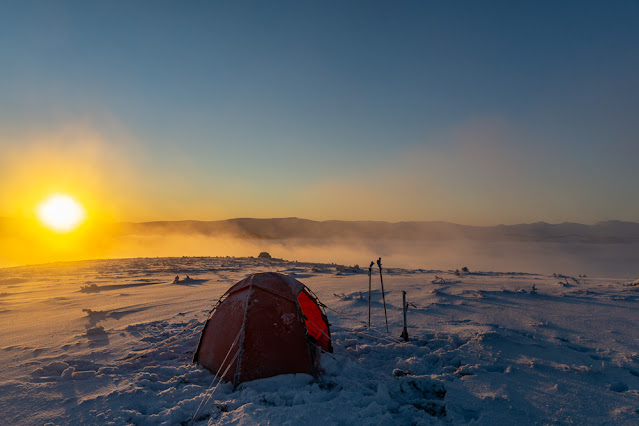
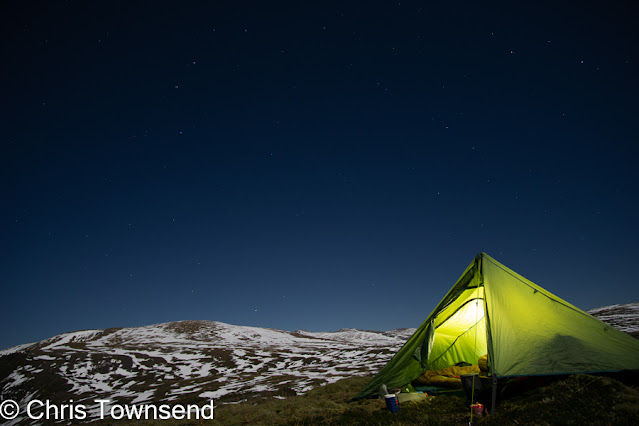
Tom Mor above Strathspey, January 6

My first camp my only snow camp of the year and just a short walk from home on a little hill overlooking Strathspey. It was right on the eve of the winter lockdown. I wouldn't pitch a tent again anywhere other than the garden until April.

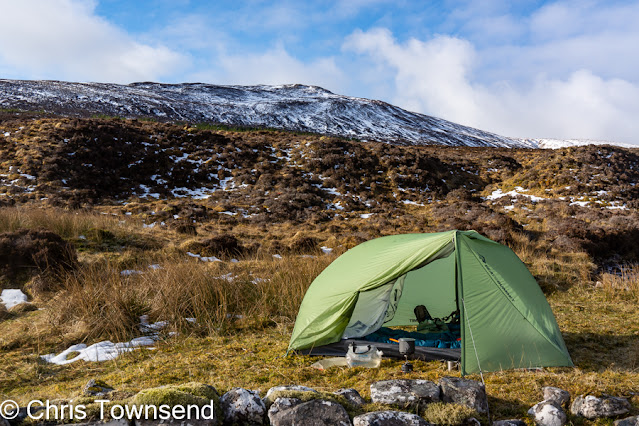
Below Carn Breac, north of Glen Carron, April 14

There was still snow on the tops when I ventured out again but it was going fast and I had no need for ice axe, crampons, snow shovel or other snow gear. From now until the autumn my gear was in summer mode.

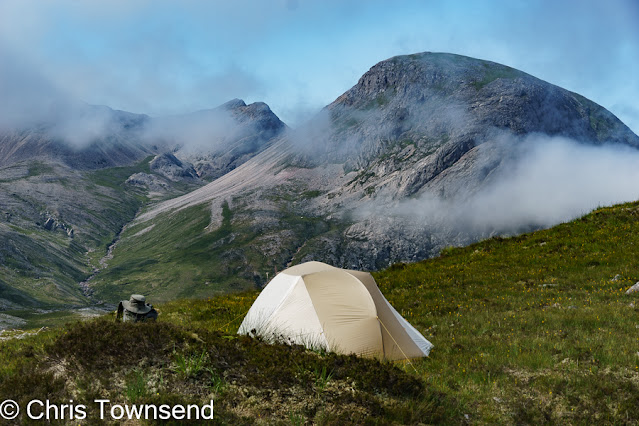
By Loch Damh, looking to Beinn Alligin, May 15

Camp with Liz Steel en route to Beinn Damh, May 17

All my camps were solo except for one where I was joined by Liz Steel for one night on a sheltered woodland site not far from Beinn Damh in Torridon.

Above Loch Maree, Beinn Eighe in the background, June 3

The longest trip was a walk into the Letterewe area on which I had three fine camps and climbed two of the remotest Munros.

Letterewe, evening June 4

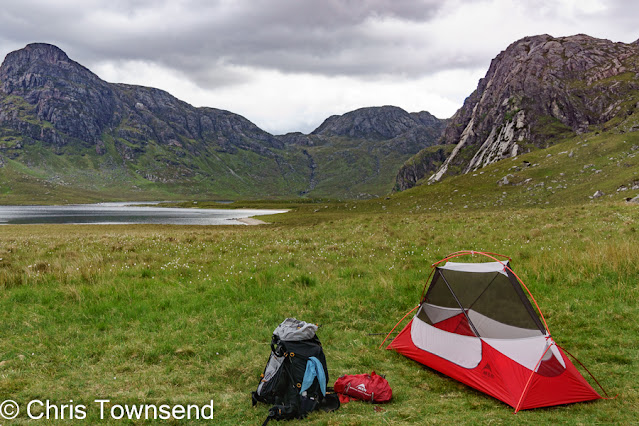
Lochan Fada, June 5

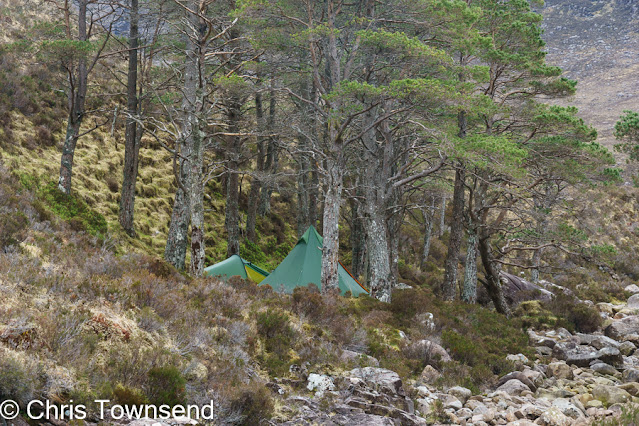
Below An Teallach, June 30

Below Ruadh-stac Beag, Beinn Eighe, July 21

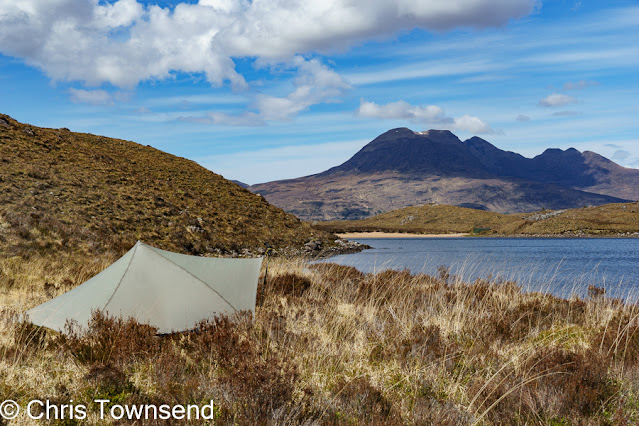
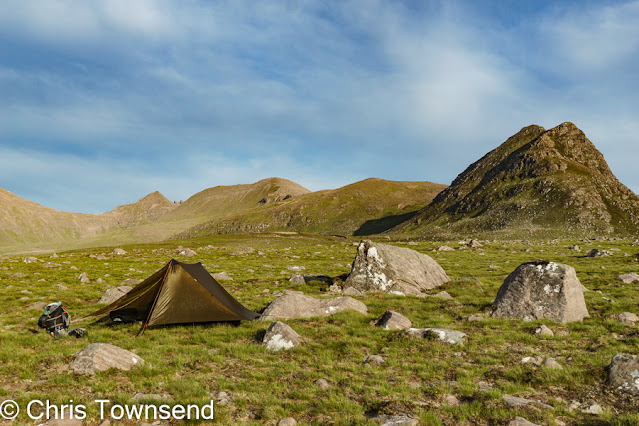
Below Baosbheinn, July 22

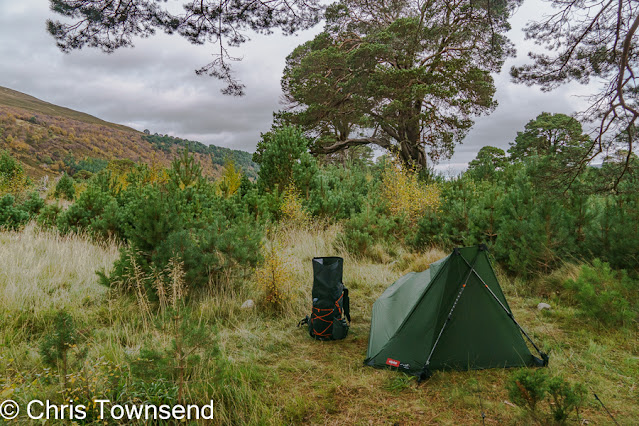
Late summer brought rain and midges - rare in the earlier dry weather - and my NW trips were over (a main aim had been photography for an upcoming project). And for various other reasons there were few autumn and early winter trips. I did though head into Glen Feshie and up on to the hills above for my last two camps. I camp in these favourite spots every year but hadn't managed to do so earlier in 2021 due to all the trips north and west.

Glen Feshie, October 23

On the Moine Mhor, December 10


Wednesday, 22 December 2021

Frost Images


After the first snow of the winter at home thawed ten days ago there were a few days of mild weather then temperatures dropped again and there was a thick frost that has lasted ever since. Tonight temperatures are rising again and it looks like this period of calm cold weather is ending. 

 
Local walks have been wintry despite the lack of snow, the landscape pale, the sky grey and misty. On strolls from home I've taken many pictures as these beautiful and magical conditions are rare. Here's a selection. They are all colour photos.


Tuesday, 21 December 2021

Winter Solstice on Cairn Gorm: mist in the glens, strange flowing frost patterns, weird optical illusions (or possibly an invasion from outer space) - updated for explanation of the last


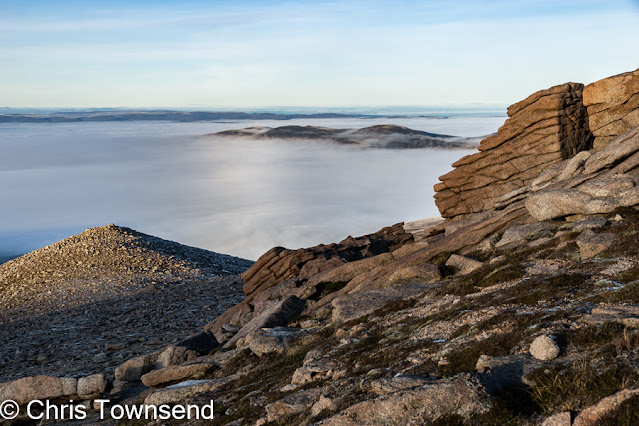
The winter solstice, the turning of the year, leading into celebrations as the sun returns. A day for the hills. The temperature inversion of the last few days continued and I drove to the Cairngorms in bands of dense fog and a temperature of -4C. Then as I climbed out of the frosted landscape and into the sunlit uplands the air warmed. The golden red glow of Cairngorm granite replaced the pale spectral washed-out corries and glens.


Between the mist and the sunlit slopes lower hills were draped in tendrils of frost that looked as though they were flowing, a strange effect I'd not seen before.


From the summit of Cairn Gorm I watched the hills darkening as the sun sank into distant clouds and the sky turned red. 


As I descended the line of hills rising above the mist far to the north-west caught my eye. I couldn't place the strange blocky shapes. Behind them were hazy hints of other objects. What was I looking at? Here are two photos. This is exactly what I saw, not some distortion in the camera.


And here's an enlarged section of the top picture.

As I haven't heard of the Martians landing I'm assuming this is an optical illusion related to the temperature inversion. Unusual and weird, whatever it is. 

Thanks to everyone who commented that the strange shapes are an optical illusion called the Fata Morgana. There's a fascinating explanation on Wikipedia.

Monday, 20 December 2021

A Winter Night on the Moine Mhor


The last few days have seen the first long spell of fine weather in the hills for many weeks, very welcome after a wet, cloudy autumn. With a forecast for warmer temperatures up high than in the glens and a possibility of a cloud inversion I decided to hear up to the Moine Mhor, that vast boggy plateau above Glen Feshie, for probably the last camp of the year.

The air was frosty as I set off, the sun having long gone from the glen floor though it still shone on the hills high above. As I climbed through the woods onto the open hillside I passed through bands of cold and warm air, some very narrow. A strange experience I haven’t had before. Overall, the temperature rose though and by the time I was on the tops, some 700 metres above the glen, I’d shed hat, gloves and fleece jacket.

 
In the west a brilliant red sunset lit up the sky with far peaks sharply silhouetted below. I crossed crunchy patches of snow and slippery icy moss. The light faded, the headtorch came out. I didn’t need it on the snow, but the moss and bog turned into impenetrable solid blackness. Soon the almost full moon rose and bathed the snow dappled hills in its eerie light. There was no wind, no sound at all. The silence was enormous.

Finding a site wasn’t easy. Every hollow was filled with snow, either hard and rippled or soft and insecure. Snow free areas oozed water. Eventually I found a dry stony flattish area. It would do. I had a thick sleeping mat to even out the bumps. I was soon settled in for a comfortable night, boiling water for a meal, reading a novel on my Kindle, writing my journal.


As always when the weather allows I left the tent doors open. At 1 a.m. I woke and looked out to the now high moon shining on the little pointed peak of Sgor Gaoith. I can take a photograph from the porch, I thought. But what’s happening the other side of the tent? I had no choice but to get up and go and see. This was a magical night. All around the moon shone. Stars sparkled. Away to the north a bank of fog hung over Aviemore. I was up for well over an hour before retreating to make a mug of hot chocolate then fall back asleep.


Awake again as the sun rose I was soon back outside. The temperature was a touch below freezing. Chilly but under a clear sky in December I’d expect it to be much colder.


I watched the sun light up the tops of the hills then slowly creep down the mountainsides until it reached the tent. Brightness and warmth enveloped me.


From camp I took a meandering line over to the edge of the steep rocky slopes tumbling down to Loch Einich then followed this round to the spring called Fuaran Diotach. Here a big, cracked snowbank lay on the north side of the grassy hollow. I measured it with my 120cm trekking poles. It was maybe some 30cm deeper and the deepest of the many snow patches left from the first heavy snowfall of the winter just over a week earlier that I saw.

From the spring I headed up Carn Ban Mor. I could see many people on Sgor Gaoith and decided I preferred the quieter slightly lower top. The still air was warm, and I sat in the sunshine, my jacket undone. 


Then it was time to descend, back down the long path to Glen Feshie. On one short section across a steep hard snow slope falling away into a stream gully I put on my microspikes and took out my ice axe. I probably didn’t them, but a slip could have sent me a long way and I was carrying them anyway. Then it was down to the frosty glen and home, satisfied.


Wednesday, 15 December 2021

Backpacking shelters: how heavy?

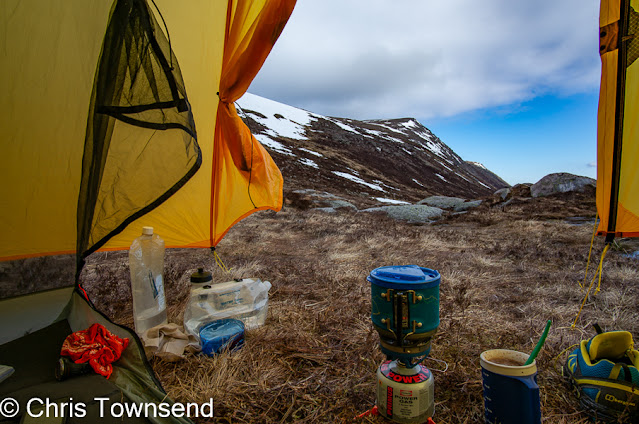
View from a tent with ample room for cooking in the porch

This article is an expanded version of one that appeared earlier in the year as part of a series of articles on tents and backpacking I wrote for The Great Outdoors in conjunction with Hilleberg. I posted the first article on choosing a tent last month and the second one on pitching a tent in bad weather last week. 

The lightest shelter is always best? Not necessarily. A tiny ultralight tent in which you get soaked from condensation before it blows down in a storm is not the best choice. Nor is a miniscule tarp that barely covers your sleeping bag if the wind picks up or the rain hammers down. 
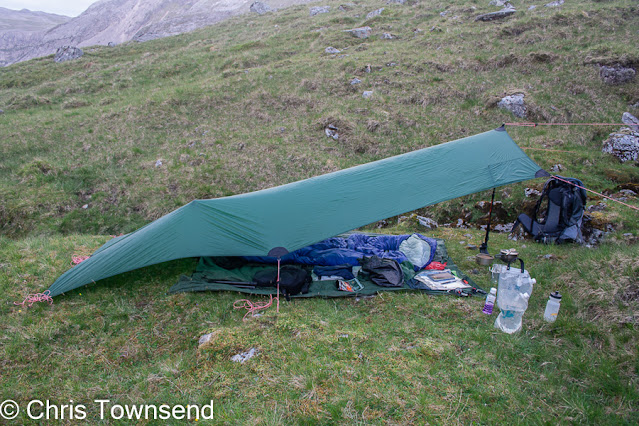
This narrow tarp was fine until the wind picked up. I had a rather uncomfortable night.

Mountain camping in winter requires a different shelter to summer camping in a forest (though if you’ll be doing both and you only have one it should be the mountain tent – it’ll be overkill in the woods, but it won’t let you down).  Weight is more important on a long-distance walk than on shorter trips but so is comfort and durability.

Three factors determine the weight of a shelter: its size, its design, and the materials it’s made from. All three are important and need considering when thinking about weight. The best size, best design and the best fabric for your needs depends on when, where and for how long you’ll be using it. Here I’m looking at shelters for the British hills and other places where wind and rain are likely.

Size
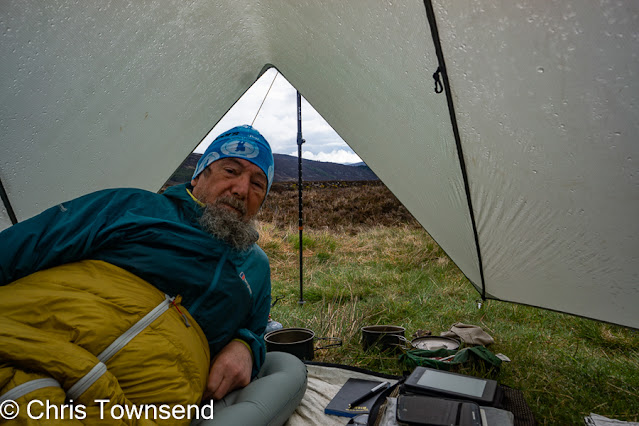
A large roomy tarp comfortable to live under in the rain

To take size first. Backpacking shelters range from tiny solo ones too low to sit up to large tarps, big dome tents, and tunnel tents that’ll take four people and all their gear. The first is by far the lightest of course but not everyone is happy with such limited space, especially on multi-night trips (I once met someone on a long-distance walk who’d swapped their ultralight bivi tent for a much heavier two-person dome). This is especially so in the long dark nights of winter. Summer or winter I like enough space to sit up and to cook and store gear safely.

Small shelters, whether solo or for two or three, require more effort to live in. Gear needs to be organised better and care should be taken not to push against the fabric and transfer any condensation to your clothing or sleeping bag (and condensation tends to be more copious in small tents and does occur in tarps). Extra weight means extra room. Which is most important?

Design
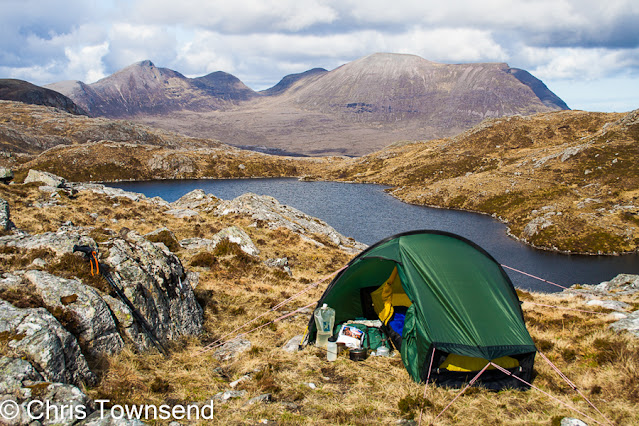
A single-hoop tent

The lightest tents, often single hoop designs, are excellent for long-distance walks and can be used high in the hills if it’s not too stormy. For regular mountain camping, especially in winter, tunnel tents, pyramids, and domes are generally more stable, particularly if made with strong materials. That said, there are some heavier single hoop tents that work well in winter. Tunnels, pyramids, and domes provide more space too, particularly important in winter when you’ll spend far longer inside.

Tarps are more versatile than tents in that there’s no fixed shape so you can pitch them in different configurations. Low to the ground in storms, high and airy when it’s dry and calm. 

Materials

The best tent fabrics are very strong and durable whilst still being lightweight. Silicone nylon is the classic example. This is as strong as much heavier PU coated nylon or polyester and ideal for backpacking shelters. Even the heaviest silicone nylon, used for mountaineering tents, is lightweight. Dyneema Composite Fabric (DCF) is even lighter and used for ultralight tents and tarps. It’s expensive though. Silicone nylon isn’t exactly cheap either. PU coated nylon and polyester shelters are heavier and may not last as long as silicone nylon or DCF ones but there are good ones and they cost considerably less.
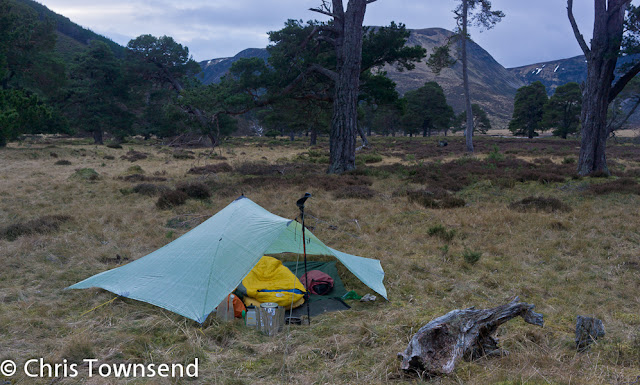
A DCF tarp

Poles and pegs are important too. Shock-corded alloy poles are strong and durable, if care is taken with them when putting the tent up and taking it down. Thicker and heavier alloy is used for mountain tents. Again, this is worth having if you’re planning on much high-level camping. Pegs may be aluminium alloy or titanium (steel I think is too heavy). What matter is that ones for key pegging points are long enough (I like ones at least 15cm long) and that you have a variety of shapes for different types of ground. I think the weight of a few extra pegs is always worthwhile. They can break and are easy to lose.

Target Weights

Given the vast number of tents available setting target weights is a useful way to whittle down the choices. Here are mine. For solo three-season use 1.8kg is my upper limit for short trips, under 1.5kg for long-distance walks where the weight matters more (and on recent long walks it’s actually been under 1kg). In winter I’m prepared to carry 2.5kg for security if the weather looks stormy. For camping with two I double those numbers. 
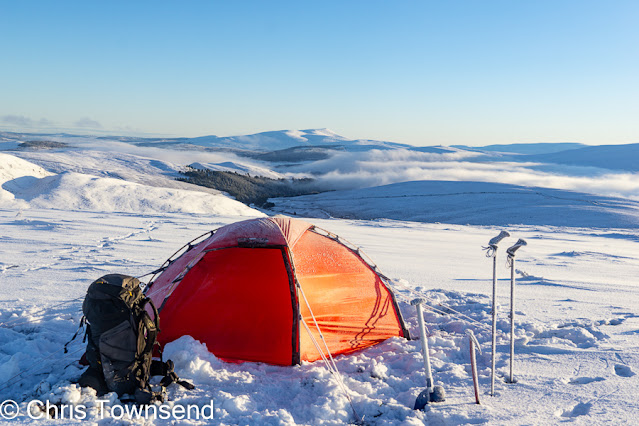
A heavy but stable solo dome tent


Thursday, 9 December 2021

A Short But Exhilarating Day In The Snowy Cairngorms

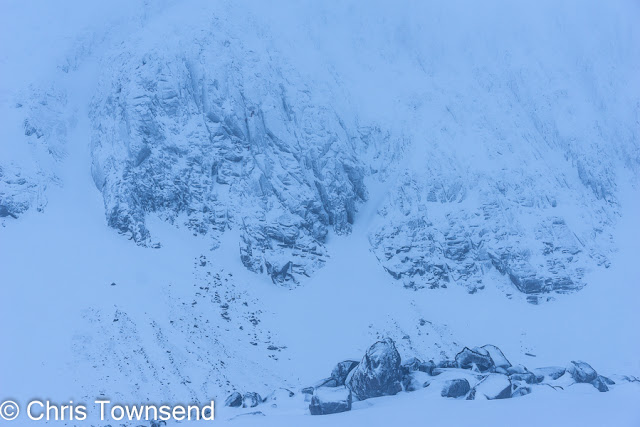
Coire an t-Sneachda cliffs

Having finally sorted out computer problems caused by Storm Arwen I went to the Cairngorms to see what conditions were like after all the snow that had fallen during the last week. The forecast suggested a fine afternoon before the wind picked up in the evening. 

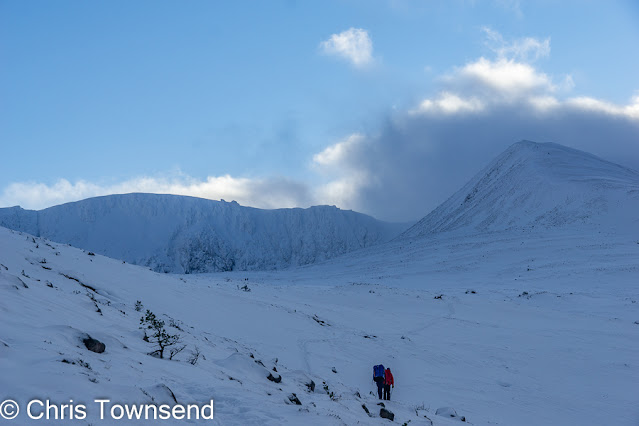
Heading into Coire an t-Sneachda

The day looked promising too as I headed across the base of the Northern Corries, planning on climbing to the Cairngorm Plateau and even going to Ben Macdui if the snow didn’t make progress difficult. I had snowshoes and donned them in the car park. There was a well-beaten down trench in the snow but walking still looked arduous. 

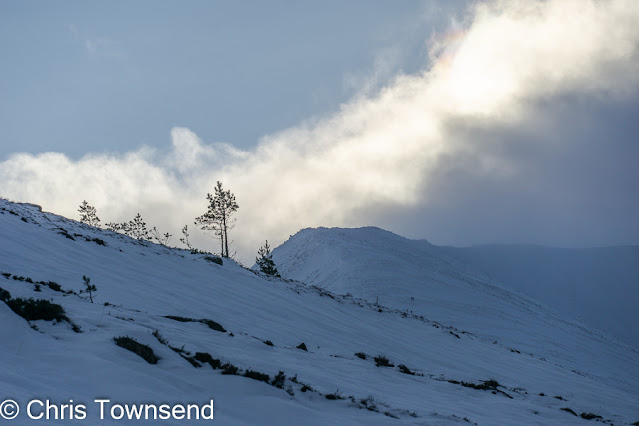
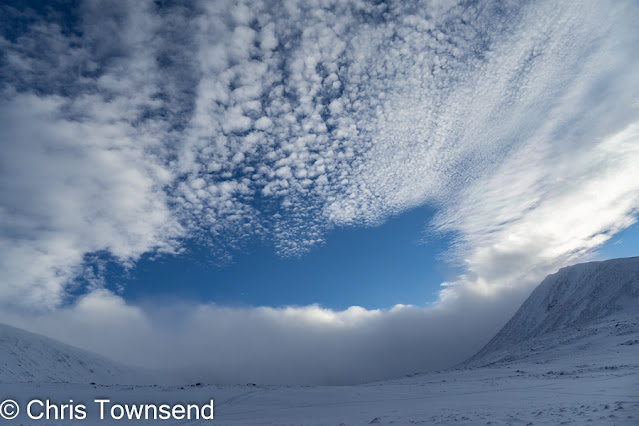
Cairn Lochan is in the clouds on the right

As I started across the mouth of Coire an t-Sneachda I could see that Cairn Lochan was hidden in dark clouds, which broke up and raced across the sky in tatters as they streamed off the summit. The wind looked fierce up there and was strengthening down here. The path was narrower now, fewer people having made it this far, and the snow soft with a breakable crust. Even with the snowshoes I broke through occasionally. 

Snowshoe tracks, boot tracks

The clouds spread east. Walking in them in a strong wind didn’t seem that attractive. Staying below them and enjoying the snow and views down here sounded much better. I’d walk into Coire an t-Sneachda for a close view of the cliffs then traverse round into Coire Lochain then return. That would be enough.

View over Glenmore Forest

Looking back the lower hills above Loch Morlich and Glenmore Forest shone in the sun. Maybe I should have gone there. Too late now. Parties of heavily laden mountaineers stomped past me, two of the last group carrying the halves of a stretcher. The Cairngorm Mountain Rescue Team out on a practice. I saw them latter high on the side of the corrie on a steep rock-dotted slope.

Stob Coire an t-Sneachda vanishes

As I approached the upper corrie clouds swept over the cliffs and wind swept down over me, bringing spindrift and damp mist, an insidious wetness that soaked into me. The precipitation seemed slight, not even drizzle. Only when I sheltered behind a boulder for a snack and a cup of hot ginger cordial did I realise my gloves were soaked and my jacket wet. I felt chilly quickly too and soon donned my insulated jacket. This wet-cold with the temperature around zero really is difficult to deal with. It’s much easier to keep warm in colder, drier conditions. When I removed my insulated jacket before moving on it was already quite wet even though I’d only had it on for maybe fifteen minutes.

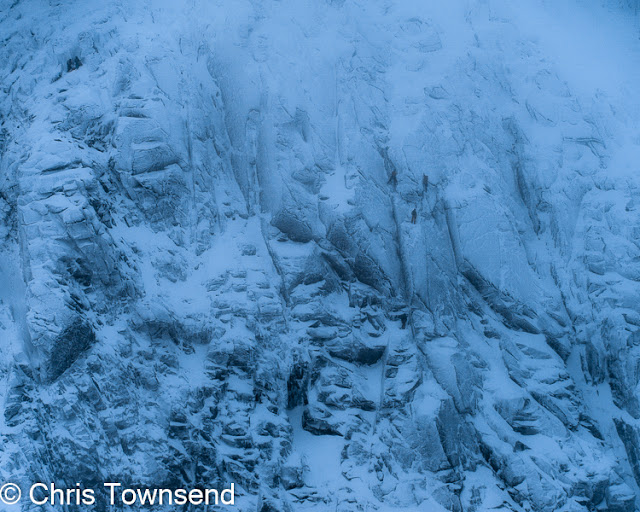
Climbers on the cliffs of Coire an t-Sneachda

The cliffs above me were plastered in snow. I could see climbers spread over them. This was as far as I was going. I forgot about Cairn Lochan and headed back to Coire Cas. The wind was strengthening rapidly. It was rocking the car as I sat inside for a last hot drink before heading home. I hadn’t gone that far but it had been a real winter day in the hills and I felt exhilarated.