 |
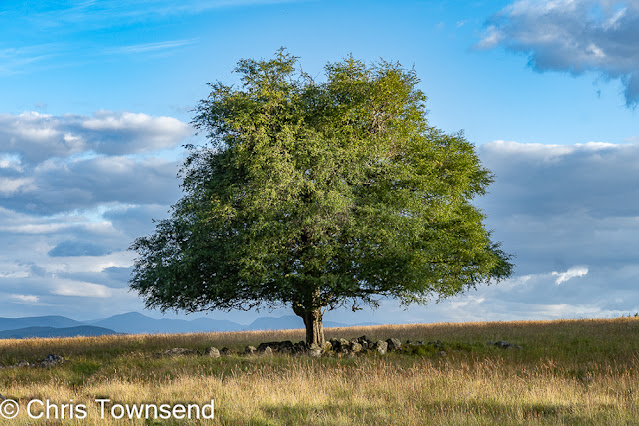
The birch tree
|
The
felling of the Sycamore Gap tree has resulted in an astonishing
outpouring of shock, grief and anger. The story has been a lead item on television
and radio news and in many newspapers. Social media has been awash with
comments from just about every organisation and individual concerned with
conservation and nature and many others as well. Most show concern and
unhappiness this has happened, others point out that far worse occurs without
such a reaction.
Like most people I felt shocked when I saw the pictures. I
did see the actual tree once, many decades ago, but since then I have seen
pictures many, many times. That makes it feel familiar and it’s felling creates
a sense of loss. Others feeling and expressing the same reinforces the emotion.It makes me think of trees I know and love and how I would feel if they were cut down.
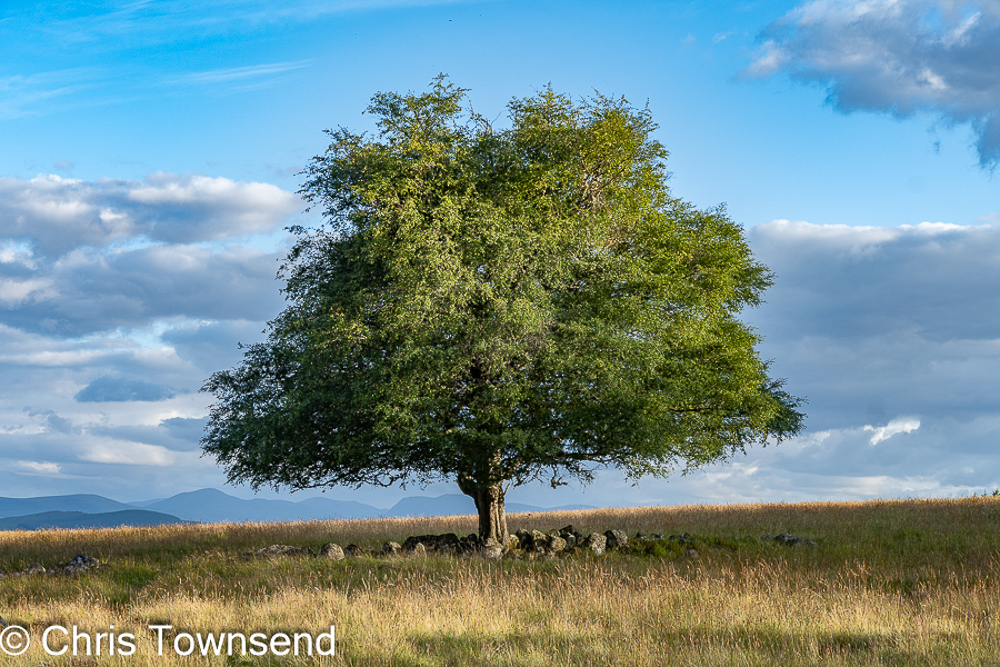
Looking out of my study and kitchen windows I can see a lone
birch tree standing in a pile of stones from an old wall in the middle of a big
field. I’ve seen that tree every day I’m at home for over thirty years. It really
is familiar, a part of my life. I’ve photographed it many times over the years
in every season and every type of weather. It is a fine tree. I like it very
much. I would be shocked and sad if it was cut down. It wouldn’t cause a ripple
in the outside world though. No-one apart from me and my family would know, let
alone care.
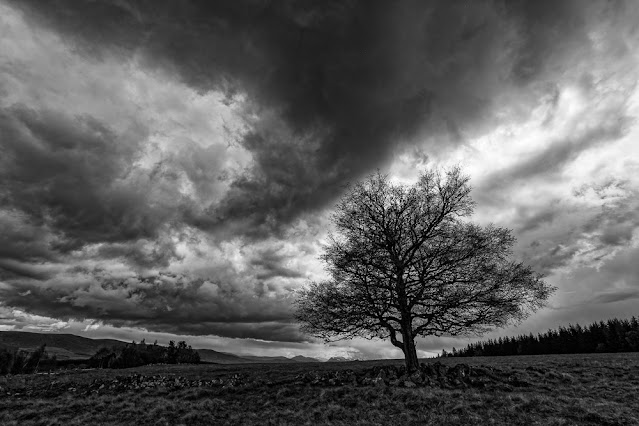 |
The birch tree in a storm
|
Birds perch in it occasionally but it’s not really a tree
for wildlife because of its location, in the middle of fields grazed by cows
and sheep. It’s rough grazing and there are flowers amongst the grass and
butterflies and other insects so it’s not a totally sterile or barren landscape.
But any birch seedlings never make it far above ground.
Not far away, also visible from the house, is a thicket of
young birches, dense and tangled and thriving. This has grown up in the last
twenty years, since the farmer stopped bringing his beasts regularly up the
track beside the area and they ate any tree seedlings.
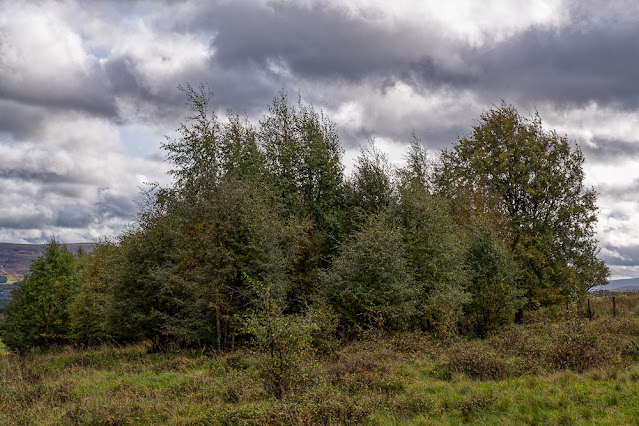 |
The thicket
|
The birch thicket isn’t very big, but it is just large
enough to go into and feel inside a wood, inside a place that is different to
the world outside. In spring and summer it is full of exuberant life. The undergrowth
is thick with flowers and grasses, insects buzz, birds sing. This is so
different to the solitary birch in its field.
Yet I have never photographed this thicket until doing so
for this piece. It doesn’t stand out; it doesn’t fit as an image of natural
beauty. Walking round and through the little trees there’s no obvious viewpoint
from which to admire them. It looks messy. It is messy. And that’s good as it’s
that messiness that is brimming with life. Nature isn’t tidy.
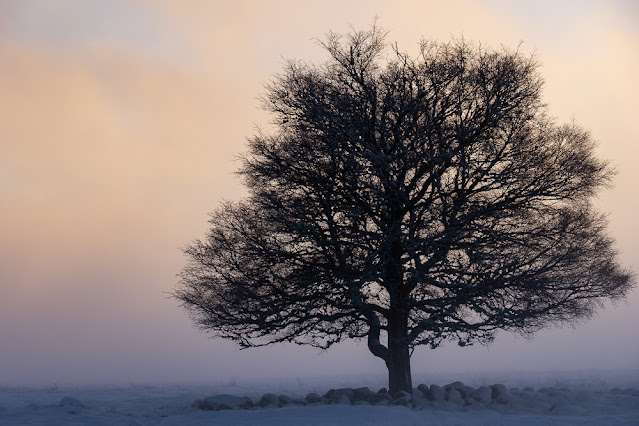 |
The birch tree in a winter mist
|
The solitary birch is very photogenic. The shape is
pleasingly symmetrical. It stands out against the sky. The Cairngorms form a
distant backdrop. It is aesthetically satisfying. That matters in our
appreciation of nature and landscape. It’s part of our culture. The Sycamore
Gap tree is a perfect example of this. Standing between those lovely curving
slopes, solitary and dramatic.
For the health of nature this doesn’t matter at all. The
birch thicket is where life is burgeoning. Remover the domestic livestock and young
birch would spring up around the lone tree but unless that happens it’s one
ageing tree with no nearby offspring and no woodland community around it.
The Sycamore Gap tree is the same. There are no other trees.
It will probably regrow, sprouting shoots from the stump. Sycamores are good at
that. But it will still be a lone tree unless others join it and if they do the
landscape will look different. Ecologically healthier but aesthetically
probably not as immediately attractive. I think that is what should happen. If
anything positive is to come out of the felling and the surge of emotions it
has engendered I hope it is that more people campaign and work for more trees
in Sycamore Gap and elsewhere, more messy thickets rich with life. That’s what
we need.