Showing posts with label outdoor equipment. Show all posts

Friday, 29 December 2023

Favourite New Gear of 2023

Mountain Laurel Designs SoloMid XL, Atom Packs The Mo 60

Here's my annual favourite gear of the year roundup following another twelve months testing gear for The Great Outdoors. Not all the items were new for this year, just tested by me for the first time. As in previous years they don't necessarily replace ones from previous years or old favourites and they're in no particular order. More detailed reviews of some of the items can be found on the TGO website - I've given links to these reviews. For other items, a few of which I haven't reviewed yet but most of which appeared in the print magazine in trip reports or comparative reviews, the link is to the company page or a UK retailer.


Built to Send X3 

This tough lightweight minimalist pack was the surprise of the year. I didn't expect it to be that good for backpacking but after using it as a daypack in winter and finding it comfortable I took it on a two-week backpacking trip in Knoydart and was impressed with the performance. (The trip is described here and here.)

Designed for mountaineering it's built to be "virtually indestructible". The single piece fabric is almost waterproof, which is great. There's no frame, just padding in the back, and this isn't shaped. There are no top tensions traps either but the shoulder straps and hipbelt are well padded. Despite this basic design it carries as well or better than manypacks with much more complex "technical designs".

It has no external pockets, just webbing straps and shockcord, and no lid, just a foldover top. Once I adapted my packing to this design I found it easy to use.


Alpkit Loki 

I've always liked lightweight simple fleece tops, finding them versatile because they aren't too warm and thus easy to layer with other garments without overheating. The Loki snap-neck pullover is one of the best I've tried in many years. The fleece is soft and comfortable and it has a big kangaroo pocket on the front which I love and which can be used when wearing a hipbelt. My review is scheduled for the March issue of The Great Outdoors.


Inov-8 Rocfly G 390 

Described as hiking boots the Rocfly G are actually more like trail shoes with a high ankle as they're very light and very flexible. The wide fit is just right for my feet and I find them very comfortable. I used them on several trips, including the two-weeks in Knoydart, and they performed perfectly and look as though they should last well. They are well-cushioned and have good grip. 


Rab Vapour-Rise Alpine Light   

As an alternative for a fleece/windproof combination Vapour-Rise is excellent with its wind-resistant outer and wicking inner. The Alpine Light has the thinnest inner of Rab's Vapour-Rise range and so isn't too warm when walking in cool but not freezing weather. I wore it every day on a stormy October trip in the Eastern Cairngorms and it was superb. The jacket is very light and has a good hood and useful pockets. 


Mountain Laurel Designs SoloMid XL

Pitching with a single trekking pole this ultralight pyramid shelter is roomy and easy to pitch. Headroom is great too. There's a mesh inner for bug season but most of the time I've used it with just a groundsheet. 

The SoloMid Xl is made from silpoly rather than silnylon which has the advantage that it doesn't stretch and sag when wet.


Pacerpole Tops

Pacerpoles have been by far and away my favourite trekking poles since I first used a pair many, many years ago. I haven't done a long-distance walk without them since. The key to Pacerpoles is the shaped handle, which I find very comfortable and which make using the poles very efficient. 

Pacerpole Tops are the handles and top sections with cam-based lever locks to attach them to the lower sections from other poles. I've tried them with several different poles and they work really well.


Berghaus MTN Arete LB Synthetic Hoody 

Back in 2016 I reviewed the Berghaus VapourLight HyperTherm Hoody and was very impressed with this ultralight insulated jacket. I wore it on my Yosemite Valley to Death Valley walk that year and have taken it on every long-distance walk since. It's astonishingly light and compact, very comfortable, wind resistant, and about as warm as a midweight fleece. I love it! Berghaus dropped it several years ago though, something I have bemoaned quite a few times.

Now, though, it's back. The name is different and there's a few design tweaks but essentially the MTN Arete LB is the same as the VapourLight HyperTherm. It's just as comfortable and performs just the same. Thank you Berghaus! 


Keen WK400

It took me a little while to get used to these unusual shoes as they have soles that curve up at the front and the back. This give a rolling feel when walking. On hard fairly smooth surfaces like roads or well-made paths this really does have an effect. On rougher terrain it's less noticeable. 

The shoes have good grip and thick cushioning and are very comfortable. My only gripe is that they don't come in Kenn's trademark wide fit and I had to go up a size and even then can only wear them with thin socks. I'd love a wider pair!


Gruezi Biopod DownWool Subzero 185 Sleeping Bag 

This unusual sleeping bag is filled with a mix of down and wool.Gruezi says the wool absorbs any moisture, allowing the down to loft fully. I can't say just how well it works but I have used it on a succession of very damp nights and it kept me warm. It is adequate to just below zero but it's not a full winter bag.

The bag is comfortable. I like the zip design. It curves over the bag and across  the base so you can stick your feet out if they get too hot.


Atom Packs The Mo 60

This is the larger version of The Mo 50 that I included in my Favourite Gear of 2021 and reviewed here. Whilst I have used the 50 for overnight warm weather trips I prefer 60 litres for longer trips and ones where I need more or bulkier gear. For me it's the ideal size for backpacking. 

The Mo 60 is lightweight and has plenty of pockets. I find it very comfortable and very stable.


Nortent Vern 1 

I hadn't heard of Nortent until Valley and Peak asked if I would like to test the Vern 1. The tent only arrived in the autumn and has not had much use yet. So far I am impressed. It's a solo single hoop tent with a huge porch with doors that open both sides of the pole. The inner is very long and has good headroom in the centre. It's very easy to pitch as a unit. It comes with a second pole that runs the length of the tent for extra stability in strong winds and snowfall. I have't used this yet but will do so soon.


Outdoor Research Helium AscentShell

Lightweight and very breathable this waterproof jacket is ideal for year-round backpacking. I wore it on the wet two-week Knoydart trip mentioned in the Built to Send X3 review above and it was excellent. The membrane inside is Pertex Shield Air. This is slightly air-permeable, which aids breathability, but does mean the jacket isn't 100% windproof. However I've worn it in some very strong cold winds and not noticed this so I don't think it's significant.


Therm-A-Rest Parsec 20F/-6C Sleeping Bag

This is a very comfortable lightweight sleeping bag with an 800 fill power hydrophobic down fill and a recycled nylon shell. There are straps for attaching it to a sleeping mat on the bottom. I haven't used these
as the bag is roomy enough for me to turn over inside it, keeping the base, which has less fill, under me. I've been warm in it with no extra clothing at -5C so I reckon the rating is about right, at least for me (I am a warm sleeper).


Moggans Midweight Merino Crew Socks

Moggans was a new name in socks to me. It means woollen stocking in Scots and the company is Scottish. These socks are made from merino wool, recycled polyamide, and elastane. I find them very comfortable even when soaked. They breathe well and are quite warm.


 Altra Lone Peak 7 Wide 

Altra Lone Peak lightweight and flexible trail shoes have been a favourite for the last seven years and I've worn them on several long-distance walks. This latest version comes in two widths for the first time. Given my foot shape I went for the Wide fit, though I suspect the Original fit would have been fine. Lone Peaks have a wide toebox and a zero drop sole, both of which I like. The grip is excellent and the cushioning good.


Rab Mythic G 

Down jackets are usually very light for the warmth provided. The Mythic G however is not just very light, it's astonishingly light. And very warm. This is due to 1000 fill power down and a reflective lining. The jacket feels instantly warm as soon as you pull it on and is very comfortable. It packs into a tiny bundle too - tiny even for a down jacket. It's designed for mountaineering but I think it's superb for backpacking.


Sierra Designs Flex Capacitor 40-60L 

I've been impressed with the Flex Capacitor pack since I tested the original version back in 2018.  I liked it so much that I took it on a 400 mile walk in the Colorado Rockies the next year. The supportive and comfortable back system hasn't changed and the volume can still easily be changed with adjustment straps. However the latest version has big stretch mesh pockets on each side.I think this is an improvement.


Keela Pinnacle

Big burly fully specified waterproof jackets designed for the winter mountains are usually expensive. The Pinnacle is an exception. It has all the features and performance of other jackets at a much lower cost. It has an excellent wired hood, roomy pockets, and underarm zips. Breathability isn't quite up to more expensive fabrics but I haven't notice this make a significant difference.


Monday, 26 October 2020

Gear For A Recent High Camp In The Cairngorms


Last week's account of my overnight trip to Ben Macdui elicited a number of enquiries as to the tent used and the gear I take winter camping so I thought I'd write a longer piece rather than just give short answers on social media. Because I test so much gear I rarely take exactly the same items on trips so this isn't meant to be a first choice list. I wasn't too bothered about weight either as I wasn't walking long distances and I was only going out for one night, so I took some items that were heavier than I'd choose for a longer trip. Here's a brief overview of the main items I took.

Tent: Nigor Wickiup 3

This is single pole pyramid tent has been a favourite for several years now. It's very roomy for one with good headroom. It wasn't tested on this trip as it was calm but on other trips it has coped well with stomy weather. I reviewed it for TGO in 2016. I used it with the half-size Inner Tent, which I reviewed later the same year. The total weight is 1625 grams.

Sleeping Bag: Sierra Designs Cloud 800

I reviewed this for The Great Outdoors earlier in the year. I hadn't tested it in cold conditions until this trip though. It has a comfort rating of -3C and the overnight temperature in the tent fell conveniently to that temperature. I was mostly warm enough but I could feel ground cold in a few places, which I think was probably more to do with my mat than the bag. The Cloud 800 does have a section under the body with no fill, just a sleeve for the mat, and maybe a bag with a complete fill would have been better. It wasn't a big problem though. I donned extra clothes and slept well.

Sleeping Mat: Sea to Summit Etherlight XT Small   

The Etherlight XT is a very comfortable mat. It only has an r-value of 3.2 though, which basically means it's not warm enough for winter. I wasn't expecting full winter conditions on this mid-October trip but my camp at 1200 metres was on very cold wet ground - there was snow lying not far away - and I think that's why I could feel ground cold. If I use this mat in freezing conditions again - and it really is wonderfully comfortable - I'll take a closed cell foam pad to put underneath it.

Cooking Gear: Soto Windmaster stove, TOAKS 1.3 litre titanium pot, titanium mug, insulated mug

At 67 grams the Soto Windmaster stove is very light. I've been using it on and off for two years, since I gave my initial impressions here, and I've found it works well in the cold. In strong winds a windshield is needed and I took a foil one with me. On this trip I didn't need it as there was barely a breeze. I used the stove with a part-used gas canister and it lit first time and boiled water quickly in the morning after being left on the ground overnight.

My pot was a TOAKS 1.3 litre one, which is very light at 162 grams. I took it to try after it came in too late for a cookware review I did for TGO earlier in the year.  It worked fine but I don't need a pot this big (my standard one is 900ml and I rarely fill that). I also took the old MSR titanium pot that doubles as a mug outside of winter conditions. It weighs 63 grams. As I was expecting freezing conditions overnight I also took a plastic insulated mug I've had for longer than I can remember. It weighs 125 grams and is worth every one. I like my morning coffee to stay hot! (And my evening hot chocolate too).

Down Jacket: Rab Microlight Alpine

This jacket arrived earlier in the autumn for a review of insulated jackets that will appear in the December issue of The Great Outdoors. It weighs 465 grams and is filled with hydrophobic recycled down. It kept me warm in camp and for the hour I spend wandering round looking at the cloud inversion and taking photographs at dawn.

Pack: Osprey Aether 65

The latest version of this pack arrived just before the trip so it was an ideal opportunity to try it out. This is a fully featured pack with a complex adjustable harness and many features. It weighs a hefty 2.35kg. My total load was 15kg and it handled this with ease. I expect it could carry far more.


Footwear: Inov-8 Roclite Pro G 400 GTX

These boots were another item that arrived just a few weeks ago. As it was a short trip I took the risk of wearing them depite little prior use and happily they were fine. They have Inov-8's graphene sole that's meant to be phenomenally hard wearing. I'll need many more trips to assess this. The grip is good though. I crossed wet grass, wet rocks, dry rocks, loose gravel, mud, tussocks, hard snow and soft snow and felt secure. The uppers are a Schoeller ceramic-coated fabric that is also said to be very durable. After this trip I was impressed to see that they are unmarked. They didn't absorb any moisture either and I did walk through some boggy areas. They are Gore-Tex lined and I found them warm enough woth midweight wool socks. They are very light, my pair of size 9s only weighing 840 grams.

Clothing

As the air was still much of the time I walked in a wool/polypro base layer, Alpkit Woodsmoke shirt, and Fjallraven G1000/softshell trousers. When in damp clouds and a breeze I also wore a windproof jacket. I had waterproof jacket and trousers with me of course but never took them out of the pack. I also took some old Rab PrimaLoft trousers that I wore in camp. I prefer these to long underwear as you can pull them on over your walking trousers. They are very warm.

For head and hands I had two warm hats (wool beanie, lined cap) and four pairs of gloves/mitts (thin liner gloves, medium weight insulated gloves, thick insulated mitts, waterproof shell mitts). These will come on every trip from now until May.

Miscellaneous

Other items included Pacerpoles and two headtorches (easier to swap them over than change batteries or charge them) plus the usual other stuff. I didn't take ice axe, micro spikes, crampons or snow shovel but I hope I'll need these soon, along with skis or snowshoes. 

Cameras and Electronics

Expecting superb conditions for photography I took two camera bodies, three lenses and a tripod. I used tham all. I also took two smartphones which ended up being mostly used for photography as well. Why two smartphones? Well, I have one to test - the Land Rover Explore R - and thought I'd compare it to the Samsung Galaxy XCover Pro I bought last month (and reviewed here).

Sunday, 9 February 2020

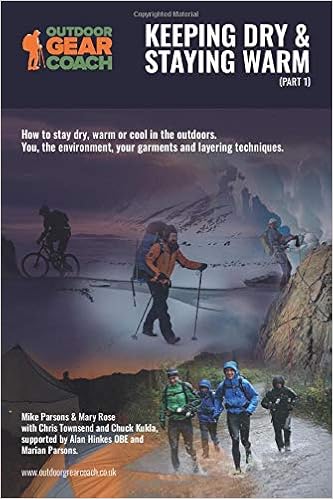
Outdoor Gear Coach: Keeping Warm and Dry

https://images-na.ssl-images-amazon.com/images/I/41LX4s6L2UL._SX331_BO1,204,203,200_.jpg

Way back in November 2013 Mike Parsons asked if I'd like to be involved in a new project called Outdoor Gear Coach he was starting with Mary B.Rose. The idea was to provide independent information on products and how they worked for outdoor shop staff, instructors, writers, bloggers and consumers.

I knew Mike and Mary from the Innovation for Extremes conferences they'd organised and from their book Invisible on Everest: Innovation and the Gear Makers. I also knew Mike from his days as MD of Karrimor International and then founder of OMM. Mike is a keen mountaineer, skier, rock climber, hill runner, long-distance walker, and mountain biker and has an unparalleled wealth of knowledge about outdoor equipment. Mary is a hillwalker and retired academic historian. OGC sounded an excellent idea and I liked the idea of working with others so I agreed to take part. Chuck Kukla, a mountaineer, instructor and researcher in the Northeast USA, also came onboard as the US editor plus Alan Hinkes as high altitude advisor, and Marian Parsons as advisor and copy editor.

Over seven years later, and after more than 700 emails, numerous Google Docs, and a few meetings OGC has published its first book, Keeping Dry & Staying Warm Part 1, available from Amazon as a print or e-book. It's a collaborative venture but most of the work has been done by Mike and Mary who as well as the writing have done vast amounts of research. Working with others and exchanging ideas and information has been a fascinating and valuable process. I've learnt a great deal. I hope the results will help others to do the same.


Saturday, 30 September 2017

Winter Is Coming! What I Wear & What I Carry

A frosty morning on Sgor Gaoith, October 17, 2015

October approaches and with it comes winter, at least in the hills. Whilst warm sunny days giving an illusion that it’s still summer do occur October days are more often chilly even if the sun is shining. Rainy and windy days are colder than only a few weeks ago. The first snows fall, often not lasting long but just as cold as later in the winter. Clear nights bring frosts and ice on pools.

October is also one of the most colourful months of the year with autumnal tints from glen to summit. Golds, russets and reds brighten the landscape as winter closes in. It’s a great month to get out in the hills but extra gear is required and it’s the month when I start to add items to my pack, beginning with extra clothing and headlamp. In the Scottish Highlands winter can begin in October. To illustrate this I’ve included some wintry October photos.

Storm on Bynack More, October 4, 2009
 
Quite a few years ago I wrote a piece about the gear I wear and carry in winter. Below is an updated version.

With winter approaching it’s time to search out the ice axe, crampons, insulated jacket, thick mitts, spare hats and insulated flask. Hillwalking becomes a more serious pastime in winter and gear needs to be selected carefully.

Here I’m going to look through my own daysack and discuss the clothing I wear as an example of what might be needed anytime from October to April.

RUCKSACK

A larger rucksack is needed in winter than summer in order to hold extra clothing and items like insulated flasks and crampons. It should have straps for ice axes too. I like a sack that is easy to get into and with enough space for gear to be packed quite loosely as this makes it easier to find items when fumbling around with cold fingers. 35-45 litres is about right. At least one reasonably sized pocket for small items is useful. A front compression panel is useful for snow shovel or crampons and mesh pockets for wet items, water bottles and flasks. Water-sensitive items are stored in waterproof stuffsacks, which I find more versatile than a pack liner. 

Frosty fields, snowy Cairn Gorm, October 17, 2012


WATERPROOF JACKET & OVERTROUSERS

Winter shell garments need to protect you from blizzards, spindrift, heavy rain and very strong winds. Lightweight summer garments can do so when combined with windproof midlayers but heavier clothing feels more secure and protective in prolonged bad weather. Shells can be worn all the time in winter as long as they’re comfortable and breathable enough. Good ventilation is needed too.

I find Paramo shell clothing ideal in winter and it’s been my choice for over two decades now. The trousers are warm enough that I only need another layer when it’s exceptionally cold and windy. The jackets have excellent wired hoods, roomy pockets and sleeves with wide cuffs for good ventilation. They can even be rolled up if it warms up.

WINDPROOF TOP

I generally wear the Paramo clothing all the time in winter conditions so I don’t need a separate windproof layer. If the weather is calm and mild and the Paramo looks like being too warm I sometimes wear a windproof top and carry a light waterproof jacket.

No snow but sub-zero temperatures on Ben Macdui, October 29, 2014
 
WARM TOPS

Unless the weather is mild I usually wear a thin fleece (100-weight or similar) over a base layer under the Paramo jacket. The fleece is the first item to go in the pack if I start to overheat. For rest stops I carry an insulated top. If the weather looks like being wet this will be a synthetic-filled jacket that’s large enough to fit over my shell jacket. If the latter is wet it doesn’t matter as the synthetic jacket will dry quickly and still keep me warm when damp. If the weather is frosty and dry and temperatures look like being below freezing I carry a down jacket.

Whichever the top I always keep it handy at the top of the rucksack and put it on as soon as I stop whether I feel cold or not. It’s much easier to stay warm than to get warm and you lose heat very quickly in cold weather.

LEGWEAR

In case of benightment or extreme cold I used to carry a pair of long johns. These are not easy to pop on when you feel a bit chilly though, making them really just emergency items. Having to remove your trousers to take them off if you overheat is a hassle too. In recent years I’ve carried synthetic insulated or down-filled trousers instead as these can be pulled on over your trousers, which makes much more sense. They’re comfortable for sleeping in too.

I usually carry a pair of waterproof overtrousers as well, not for their waterproof qualities, but so that I can pull them on if my legs feel slightly cold but the insulated trousers would be too warm. Lightweight ones with long or full length zips are best so they can be donned over boots.

GAITERS

I don’t like gaiters and only wear them if the snow is deep or the ground is very muddy. As they spend much time in the pack I like lightweight ones. 

Snow on the Cromdale Hills, October 15, 2012


GLOVES & MITTS

Cold hands are unpleasant, painful and can affect your ability to do things so good gloves or mitts are essential. I always carry four pairs – liner gloves, midlayer softshell or windproof fleece gloves, thick insulated mitts in case of extreme cold,and waterproof shell mitts that can be worn over any of the others. Having all these also means I have back-ups in case of loss (gloves can be whipped away by the wind very quickly).

WARM HATS

Wind can easily whip heat away from your head even with a warm hat unless the latter is windproof so when it’s stormy I like hats with windproof shells, especially as I prefer not to wear a jacket hood unless it’s absolutely essential. Fleece ones with peaks and ear flaps are ideal. Because warm headwear is so important and hats can blow away I usually carry a fleece or wool hat too, which is fine on calmer days and under a jacket hood when I really have to pull it up.

MAP & COMPASS

These are year round essentials of course. Even more than in summer I like to keep them in jacket pockets for quick access. I often carry a spare map too, in case one blows away. This has never happened but is always possible.

SMARTPHONE/GPS

In a blizzard finding your location on GPS mapping can make navigation much simpler – if you can use the device in the cold. Gloves designed to work with touchscreens and GPS units with large buttons make cold weather usage much easier. Carrying the device in a pocket helps keep it warm and prolongs battery life. It’s still always wise to carry a portable power pack too.

View over Strathspey to Sgor Gaoith & Sgoran Dubh Mor, October 7, 2011

HEADLAMP

Once the nights start to lengthen a good headlamp can be essential. I carry two. It’s much easier to swap them over if the batteries fade in one than change batteries – and much easier to change batteries when you can see. I always carry spare batteries too. Headlamps that use rechargeable batteries – an increasing number these days – can be charged from a portable power pack. However it’s not easy to use them whilst doing this so the other headlamp is always one that takes standard batteries.

SURVIVAL BAG/GROUP SHELTER

In summer I just carry a light bivi bag. In winter I prefer something a bit more protective so I take a group shelter, even when on my own. In a two-person one I can place my rucksack at one end and sit at the other. It’s far more comfortable than a bivi bag and I have used it as a lunch shelter on stormy days. It’s surprisingly warm inside a group shelter – condensation can be a problem – and great for morale even when alone.

SITMAT

Snow, ice and freezing rocks are not comfortable to sit on. A foam mat can make a huge difference. I often don’t carry one in summer. In winter I always do. It’s bigger than the tiny sit mats you see in outdoor shops too, being either an OMM DuoMat or an offcut from an old foam sleeping pad. Both fit neatly down the back of my rucksack.

Padded rucksack backs provide insulation too but if you sit on your pack make sure you’re not crushing anything fragile.

WATER BOTTLE/INSULATED FLASK

Freezing cold water from an ice fringed mountain stream may be a revitalising drink but it’s not that attractive during a blizzard. Sometimes streams are completely frozen too and at other times they can be hazardous to reach. Hot liquids warm you up and have a great effect on morale so I always carry an insulated flask, usually containing a hot spicy drink (Rocks Organic Fiery Ginger Cordial is great – it has chilli in it). Snow can be added to a flask to top up the contents – this tastes fine with fruit juices and other drinks that are okay when tepid but not so nice with tea or coffee. I usually carry a 600ml flask plus a half litre water bottle, which is carried in the rucksack inside spare clothing so it doesn’t freeze.

You can carry a stove and small pan for making hot drinks but I don’t usually bother on day walks. There’s little enough daylight in winter anyway without spending time boiling water or melting snow. Even on backpacking trips I carry a flask as well as a stove and fill it up in camp.

FOOD

As in summer any food will do but complex carbohydrates (bread, cake, biscuits, flapjack) are better than simple sugars at providing long term energy. Because food is needed to keep you warm as well as provide energy I carry more than in summer. Chocolate, which I never carry when it’s warm because it melts, is a winter favourite for snacks. 

The Northern Cairngorms, October 31, 2013

TREKKING POLES

It needs to be emphasised that a trekking pole is not a substitute for an ice axe. On any terrain where a slip could be hazardous you need to have your ice axe in your hand. If you’re not sure if the terrain is dangerous have your ice axe ready anyway.

That said, trekking poles can be just as useful in winter as summer. In deep snow they can be more useful, as long as you fit snow baskets to stop them sinking in too far. On hard snow and frozen ground that isn’t steep enough to warrant using an ice axe they can help with balance. As well as supports when walking poles can be used for checking whether snow over streams or bogs is solid or not.

ICE AXE

On any but the gentlest hills an ice axe is essential if there is much snow and ice. The length and whether to have a leash are debatable issues. Much more important is to know how to use your axe for both self-belay and self-arrest and to have it in your hand if it might be needed and not strapped on your pack. When an axe is needed only occasionally it can be slid between your back and the pack so you don’t need to remove the latter to get it.

CRAMPONS

Although an ice axe is the primary tool for snow-covered hills it’s not adequate on its own on hard snow or ice. Then you need crampons as well. Walkers don’t need the heavy, complex designs intended for ice climbing. Walkers’ crampons will fit even bendy boots.

SNOW SHOVEL

Few walkers carry a snow shovel but I regard one as an essential winter tool. It can be used for digging snow shelters if you’re stuck out, building snow walls for protection against the wind and digging victims out of an avalanche.

THE TOTAL LOAD

The total weight of all this gear, including clothing worn, is around 7-8 kilos, depending on exactly which items I take. That’s not too heavy for enjoyable walking while providing all the protection and safety needed in the winter hills.

Snow Strathspey woods, October 26, 2012