Showing posts with label RSPB. Show all posts

Friday, 23 February 2024

Communications in the Hills: Masts or Satellites?

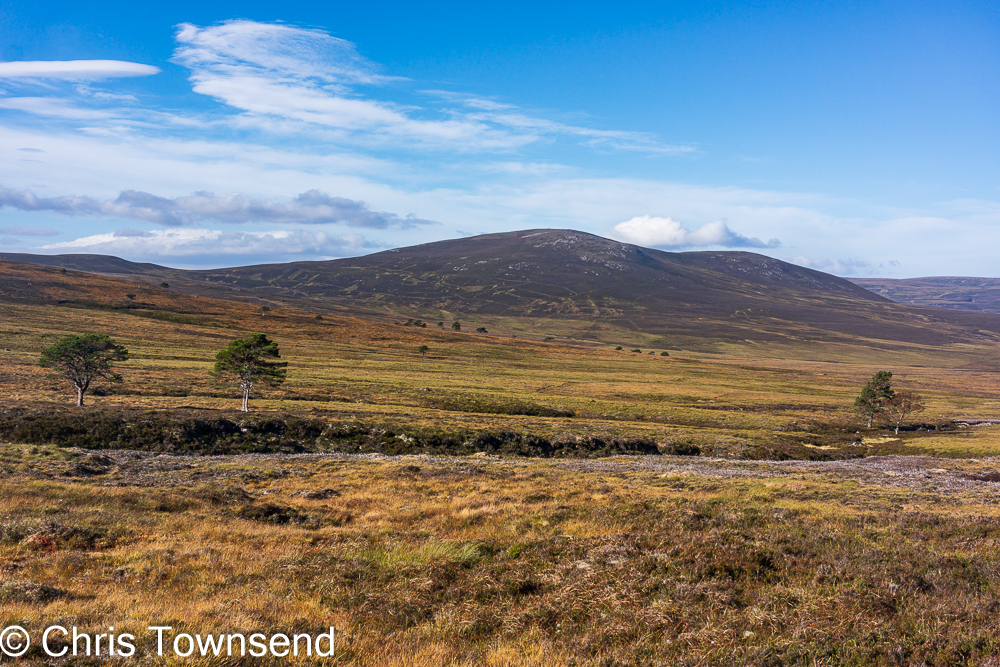
A communications mast is proposed for this area in Abernethy nature reserve.

Since I wrote about the threat to wild land from phone masts last November more and more of them are being proposed. The latest I’ve seen is one planned not far from Ryvoan Bothy on the RSPB’s Abernethy nature reserve. The RSPB has been posting about this on social media and says “the proposed mast would include two wind turbines, a solar array, a backup generator and a short stretch of new track”. The RSPB is concerned it “could have a negative impact on Golden Eagles, Black Grouse and Red-throated Divers”. It would also be a gross intrusion in a beautiful area in the Cairngorms National Park.
A 27.5 metre mast is proposed here in the Monadhliath Wild Land Area

Another recent proposal is for a 27.5m high telecommunications mast along with 2 x 15m wind turbines and 36 solar panels in the heart of BrewDog’s Lost Forest in the Monadhliath Wild Land Area. This was flagged up by Parkswatch Scotland, and is No.8 in its excellent series on unacceptable telecommunications masts. The developers assert that telecommunications in such remote uninhabited areas are “essential”.

Now, begging the question as to whether they’re needed at all (they’re not), it looks as though such masts may be unnecessary in a few years anyway due to smartphones with satellite connectivity, some of which are already available. Satellite phones are of course also available now though these are heavy and expensive.

It would be very sad and highly ironic if wild areas were desecrated with developments that soon served no function. Parkswatch Scotland covered this in a good post by Robert Craig who points out that Personal Locator Beacons and satellite communicators have been available for over a decade anyway.

Garmin InReach Mini 2

The first of these devices were just for sending an SOS in an emergency. Then came ones that allowed you to send a simple OK message. I carried one of these for several years so my partner would know all was fine when I was away in the wilds. More recently models that could be used to send and receive messages became available. I now use one of these – the Garmin InReach Mini, which I reviewed here.  This tiny device can send and receive messages and can be connected to a smartphone so you can use the latter’s much larger screen.

So there’s already no need to have a line-of-sight connection with a landbound mast if you have one of these communicators. There is the question of cost of course and carrying yet another device. However given the speed of phone developments I expect that smartphones will offer the same features soon and communication masts really will become redundant.

Until then we need to object to every proposal for masts in wild land that we hear about.  

Saturday, 30 January 2021

RSPB Big Garden Birdwatch 2021


With snow lying since late December and temperatures rarely rising above freezing for over a month our feeders have been emptying fast every day so I expected to see far more birds than last year when the weather was mild for this year's RSPB Big Garden Birdwatch. In fact though there were only three more birds than 2020 and one less species. 

Looking through previous years results I think this is because last year's numbers were high given the mild weather rather than this year's being low. 

The species missing this year that we saw last year and in previous years is the greenfinch. Until a few weeks ago we were seeing several every day but since then there hasn't been a single one. We also haven't seen any siskins for many weeks but these do come in waves - many for a few weeks then none for a while.

Coal tits were the commonest bird this year with sixteen individuals. As they dart in and out so fast counting them is difficult and I suspect the figure is an underestimate. Chaffinches are usually the commonest by far - twenty last year and only four of any other species - but this year there were only nine. 

Here's the full list of this year's birds.

Coal tit                                   16
Chaffinch                                  9
Blue tit                                     5
Great tit                                   4
Blackbird                                 4 
Great Spotted Woodpecker       3
Robin                                      3
Dunnock                                  2


Sunday, 26 January 2020

Big Garden Birdwatch 2020

The mild weather of the last few weeks has seen a reduction in the number of birds coming to the feeders in our garden, so I wasn't expecting to see many for this year's RSPB Big Garden Birdwatch. In fact though, there were forty-three birds and nine species, not as many as last year when it was colder, but far more than the sixteen birds and seven species of 2017. Maybe the change in the weather - it's a touch colder today with a dusting of snow on the hills and it's forecast to turn really wintry - has brought the birds out.

As usual there were far more chaffinches than anything else and counting them was difficult as they arrived in large flocks. I reckoned there were at least twenty at any one time. All the species were ones we see every day. Those we see often but not every week - long-tailed tits, goldfinches, siskins - didn't appear. Even so, doing the birdwatch was enjoyable, as it is every year. An hour spent watching birds is never wasted.


Here's what I saw this year:

Chaffinch               20
Blue Tit                   4
Coal Tit                   4
Greenfinch              4
Great Tit                 3
Dunnock                2
Robin                     2
Blackbird                2
Great Spotted Woodpecker    2

Monday, 23 April 2018

In Praise of Ravens

Raven page from the excellent Collins BTO Guide To British Birds
A rush of air. I looked up. A raven. Flying low some fifty metres away. The bird turned effortlessly and flew back past me, having a good look. Ravens are curious birds and know that people often leave tasty scraps of food. Later I heard it's harsh 'crark' cutting through the windy air, one of the thrilling sounds of the mountains.

I was on the vast plateau of the Moine Mhor in the Cairngorms just two days ago when I encountered that raven. I returned home to learn that Scottish Natural Heritage (SNH) had issued a licence for a five-year mass cull of ravens in an area of Perthshire noted for wildlife crime. This is appalling and has led to an outcry, as it should. It's been covered thoroughly by Raptor Persecution UK and the RSPB has said it is outraged. There are two petitions to sign - one on the Petition Site and one on Change.org. More importantly letters of objection can be sent to Mike Cantlay, SNH Chair, calling on him to withdraw the licence with immediate effect. Emails to: chair@snh.gov.uk.

There seems to me no justification for this slaughter. It's noteworthy that SNH worked with gamekeepers, farmers and estates on this but no wildlife or bird organisations. Not the RSPB, or the Scottish Raptors Study Group, not the Scottish Wildlife Trust - no-one in fact who might have argued against the proposal.

The killing of birds of prey to protect other birds so they can be shot always sickens me. This proposal has upset and angered me more than most as ravens are a favourite of mine. One of the symbols of wild places their harsh cries always inspire me. They are brilliant fliers and I love watching them and find their behaviour fascinating. They are very curious and often unwary around people. Sit and watch and they'll perform superb aerobatics as they keep an eye on you in return. Look back and you'll often see them land where you've been sitting, hoping to find something edible.

Ravens are found in wild areas worldwide. I've seen them everywhere from the deserts of Arizona where I startled a flock of them feeding on a dead cow and Makalu base camp high in the Himalaya where another flock was enjoying teasing a dog. The last case showed just how much ravens like having fun and how clever they are. The dog had tagged along with us for several days, feeding on scraps chucked to it by the kitchen crew. At base camp I was sitting on a rock watching some ravens picking about on the ground when the dog suddenly appeared and ran at the ravens, which flew up in the air cackling loudly. They didn't just fly off though. Instead they settled on a boulder and watched the dog. Then one of them flew down onto the ground near the dog and turned its back to it. The dog duly charged the raven which flew off to the sound of loud cackling from the other ravens. Another raven then repeated the performance. Then another. The ravens were clearly finding the poor dog very entertaining.

In Scotland many mountain features are named for the raven. There's a Creag an Fhithich (rock of the raven) on Ben Lawers, a Biod an Fhithich (pointed top of the raven) in Kintail and an Eas an Fhithich (waterfall of the raven) in Strathglass plus many more. It was and is an important bird of mountains and wild places. It should remain so, unpersecuted.


Sunday, 28 January 2018

Big Garden Birdwatch: A Plethora of Coal Tits

This year's Big Garden Birdwatch saw far more birds than last year, probably because the weather has been cold and wintry where last year it had been unseasonally mild for many weeks. Today though it was mild, +7C, overcast and drizzly.

Coal tits were the dominant birds with so many flying in and out that it was hard to count them. I definitely saw eleven at one time though I reckon there were far more than this. These hyperactive tiny birds rarely stay on the feeders for long. Chaffinches, the commonest bird the last two years, were down to just four.

In total nine species appeared, two more than last year. Eight are ones I've seen every day for many weeks now so not a surprise. There was a siskin though - I haven't seen one of these for many months.

It's always a pleasure taking part in the Birdwatch and actually recording what I see. I always look forward to the results too. Bird watching was one of my first outdoor activities and I've never tired of it. Birds are such an essential part of nature. We need to look after them and recording numbers is part of doing that.

Saturday, 28 January 2017

Big Garden Birdwatch

Chaffinches in the rain

The last three months of mostly mild weather has seen a big reduction in the numbers of birds visiting the feeders in the garden so I wasn't surprised when today's count for the RSPB's Big Garden Birdwatch produced the lowest total we've ever had. Just 16 individual birds and 7 species. Last year we counted 47 birds from 9 species. The two species not seen this year were great spotted woodpecker, though we do see one most days, and greenfinch - we haven't seen any for many weeks.

Rain has been falling all day with very low cloud and no wind. Many of the birds we did see were just sitting in the trees staring into space. More interesting to watch was a red squirrel on a nut feeder and three rabbits browsing on shrubs.

The figures for this year are:

Chaffinch  7
Great tit     2
Coal tit      2
Blue tit      2
Robin        1
Dunnock   1
Blackbird  1

Sunday, 31 January 2016

Big Garden Birdwatch


Taking part in the RSPB's Big Garden Birdwatch always makes for an interesting and somewhat hectic hour. Trying to count masses of small birds flying in and out to the feeders is surprisingly difficult. This year there were no surprises with all the birds we see every day except for pheasants turning up. The soft snow on the ground may have discouraged the latter. None of the species that only visit occasionally - goldfinches and siskins in particular - appeared and neither did the red squirrels, though these were around earlier. Here's what we saw during one hour this morning:

Chaffinch                                 12
Coal tit                                    10
Great tit                                    5
Blue tit                                     4
Great Spotted Woodpecker        3
Robin                                       3
Greenfinch                                3
Dunnock                                   2
Blackbird                                  2

Tuesday, 15 September 2015

25,000th John Muir Award in Cairngorms National Park Awarded

Environment Minister Aileen McLeod presents the JMT Award to Ms Grace Moir

The John Muir Award is one of the great success stories of the John Muir Trust. The scheme is aimed at helping people from all ages and backgrounds to become involved with wild places and it has proved very popular. In the Cairngorms the Award is carried out via the National Park. Recently the 25,000th Award in the Cairngorms was achieved by Grace Moir and she was presented with the Award by the Scottish Environment Minister Aileen McLeod at a ceremony at the RSPB's Forest Lodge in the heart of Abernethy Forest.

I attended as a representative of the John Muir Trust along with Trust Chairman Peter Pearson. It's always a pleasure to visit the wonderful Forest Lodge, even if finding it in the maze of roads in the forest always seems difficult! After the award ceremony we bumped off down Abernethy's rough tracks in a couple of vehicles to have a look at some of the work the RSPB is doing in the area (I wrote  about a longer visit with the RSPB here). We stopped at a high point to look over the regenerating forest to a cloud-shrouded Meall a'Bhuachaille while Jeremy Roberts, Site Manager for the RSPB, pointed out various locations to the Minister. The day was dull and still and the midges emerged in clouds. I was impressed by Aileen McLeod's coolness as she listened to Jeremy and looked at the maps and the landscape. The rest of us were flapping our arms and walking round in circles!

Further more formal reports that don't mention the midges can be found on the John Muir Trust website and the Cairngorms National Park website.

Wednesday, 27 May 2015

Reforesting the Hills


Bynack More rising above Abernethy Forest

This article first appeared in The Great Outdoors a year ago. I've been thinking about rewilding, forests and land use recently and have had various discussions on social media sites on related topics so I thought I'd post it here.

How wild and natural should the hills be? Do you want them tame and docile so the walking is easy and secure? I ask in response to an online comment from a TGO Challenger who likes sheep in the hills because they make walking 'very pleasant'. Now sheep-cropped grassland certainly is easy to walk across but it's also an artificial and biologically degraded landscape. Natural landscapes are wilder, more diverse and, for the walker, more challenging. Where the terrain is impossibly tough - dense forest, tangled bushes - the answer can be a path. I'd rather see a narrow trail through a wild and natural landscape than sheep-cropped terrain where it's easy to walk anywhere. And if there's no path then I'd rather find a way through the difficulties than have them tamed.

Regenerating forest in Coire Ardair, Creag Meagaidh

A bigger question is how to achieve more natural and diverse wild lands. Just what does that involve anyway? Ideally I think it means leaving land alone, leaving it to be 'self-willed'. However whilst that's fine for pristine and near-pristine places it may not be for more damaged ones. The question then becomes how much interference and management is acceptable. In turn this raises the question of how long you want to wait and whether the rewilding of a landscape can be speeded up. The answers vary depending on your outlook and aims. Aesthetically I think any management should be as unobtrusive and unnoticeable as possible. I also think such management also produces a more natural landscape in the long run. However I accept that in some places it just isn't possible, at least at present.

Recently I was in Eskdale in the Lake District where some extensive tree planting is being undertaken by the National Trust. Because this is sheep country the planted areas are fenced and the trees are caged. This looks highly unnatural. In time I guess the cages and fences will be removed and the forest will look more natural though it will still have straight lines dividing it from the bare land outside it. Less obtrusive is the work being done by Trees for Life in Glen Affric. Again planting is involved but the trees are not caged. The new forests are simply fenced in to keep out deer. Again the line between the rich vegetation inside the fence and the sparse boggy vegetation outside it is stark.

Scattered pines at the edge of Abernethy Forest
 
Contrast these schemes, both of which I support, with that of the RSPB in Abernethy in the Cairngorms, a huge reserve that stretches from the forests around Loch Garten of ospreys fame to the summit of Ben Macdui. Having heard that the RSPB was to plant areas that as far as I knew were already regenerating and pretty natural anyway I contacted the RSPB to find out what was going on and was invited on a field trip so I could see for myself (thanks to Regional Director George Campbell for organising this and also to Senior Site Manager Jeremy Roberts and Ecologist Andy Amphlett). Before we headed out to look at the area the scheme was explained and I was shown detailed maps of the forest divided into different types of area. No planting was going on in the mature natural forest or in areas where there was good regeneration I was told. Overgrazing isn't a problem in Abernethy now as deer numbers have been reduced and sheep removed. However there is a wide band of higher ground where the sheep used to graze that runs up to what should be the natural treeline of 650 metres where there are no trees at all and so no seed source for regeneration. There are also areas of previously felled and then planted forest where many tree species are absent. It's in these areas that the RSPB is planting small groups of trees to provide a seed source. The planted areas won't be extensive, just small clumps, and there will be no cages or fences.

New growth in Abernethy Forest

Out in the  field I was shown some aspen that had been planted on some heather moorland. I would never have know they weren't the product of natural regeneration. Higher up we found the last tiny pines, still well before the 650 metre line. It was clear that there would be no natural regeneration here for a very long time. The RSPB has set a 200 year goal for the return of the forest so even with the planting it will take a long time. For walkers there will be no discernable sign of this management, unlike in Eskdale and Glen Affric. That's because the RSPB owns the land and has control of grazing, which takes us back to the start of this piece and the question of what sort of landscape we want. For myself the idea of the returning forest is exciting and unspiring. I'll only see it beginning but that is a joy in itself.

A last pine, Strath Nethy, Abernethy

Saturday, 24 January 2015

Big Garden Bird Watch


The RSPB's Big Garden Birdwatch is an important snapshot of how garden birds are doing. We always take part, though the remote and wild nature of our garden means there is less distinction between it and the surrounding woods and fields than with town gardens. Today it was cold with a strong NW wind and flurries of snow mixed with bursts of sunshine. The mix of birds - great tit, blue tit, coal tit, chaffinch, blackbird, robin, dunnock, great spotted woodpecker, pheasant - was typical for the time of year. Some birds that are regulars at other times of the year - greenfinch, siskin - are rare in January while some - long-tailed tits, goldfinches, crested tits - we only see occasionally.

Blue tits and coal tits in a burst of sunshine

This year there was just me doing the counting and it proved difficult, especially with the coal tits and blue tits, which flew in and out constantly, and six feeders plus the ground and bushes to watch. I'm sure my counts of six coal tits and eight blue tits at any one time are probably too low.

Coal tit

When the bird numbers calmed down I took photographs through the window - handheld with a 55-210 zoom lens, the bright snow meaning I could use fast shutter speeds.

Great spotted woodpecker & great tit

Blue tit

Friday, 11 July 2014

Ospreys & Otters: A Visit to Loch Garten

Loch Garten

Out on the loch beyond the water lilies a goldeneye duck and duckling floated in the sunshine below the cloud-dappled blue sky. A peaceful scene. The only sound the gentle ripple of water on the shore. Abruptly a duck, a mallard, skittered out of the reeds and across the water, wings flapping, legs thrashing wildly, quacking loudly. Just behind it a fluffy duckling paddled frantically, trying to keep up. Something dark surged in the water behind the duckling. A rounded head emerged briefly then a curving body slicing through the water. An otter. There was flurry in the water. Otter and duckling vanished. The duck continued alone. Further out the goldeneyes drifted serenely. Within seconds the scene was calm again, the brief life-and-death drama over.

Loch Garten

This was the one moment of excitement on an otherwise tranquil wander beside beautiful Loch Garten and through the pinewoods of Abernethy Forest on a lovely sunny day. Everything glowed with warmth and life. White water lilies spread round the edges of the loch, more than I’ve ever seen here before. The first blaeberries were appearing in the woods. Nature at its most relaxed and welcoming. Then there was that sudden flash of violence, the sudden ending of a duckling’s brief existence. A reminder of the reality of how much of nature works.

Live video of the osprey nest in the visitor centre.

Earlier we had visited the RSPB’s Loch Garten Osprey Centre not far from the loch, our first visit of the year and rather later than usual. The three young ospreys were almost ready to fly, standing on the edge of the nest and flapping their wings. Their mother perched on a nearby tree, watching.  Using the powerful centre telescopes we were able to watch them and marvel at their grace and power. There are also live videos in the centre that show them closely. Like the otter these are hunters as the piercing eyes and hooked bills showed. Soon they will leave the nest and then Scotland, heading south to West Africa for the winter. Seeing the ospreys and reflecting again on their return to the Highlands and the work that went into protecting them is always inspiring and gives hope for the future of wildness and nature.