Showing posts with label nature. Show all posts

Thursday, 29 February 2024

Badger Tracking Success!


Wandering across the snow-covered fields near our house a few weeks ago we came across some tracks. Consulting identification books back home we reckoned they were made by a badger. We followed the tracks across the field until they faded away where the snow was sparse near a fenced spruce plantation. There was no way a badger could get through the mesh of the fence, but the tracks led towards a hole in the wire that was big enough. Maybe the badger went into the wood here? And if so, maybe badgers did so regularly. Hazel suggested putting my trail camera in the wood pointing at the hole in the fence to find out.

Crawling through the spiky, densely packed trees was not easy but I managed to fix the trail cam round a tree trunk. Several days later we retrieved it and were disappointed. No badgers. Or maybe there was. One very blurred image suggested something had gone right up to the camera. Hazel reckoned it was a badger.

We tried again. This time Hazel set the camera up and did a better job than me as it was lower down and angled to cover a fair amount of the ground. The images from my placement had shown the fence and tree branches clearly but not much ground. Another week or so and we went back to get the camera, hoping this time we’d see something.


Success! There was a badger. Or possibly a few as one appeared in nine images over four days. We were delighted! Very simple tracking but it was pleasing to know we were right. And that there were badgers.


There was also another blurred image that looked like the badger’s head was right up against the camera. The following pictures were at an angle. The camera had been knocked out of position. 


Then, after some more badger pictures, there was another very, very  blurred image, possibly showing fur. After that there were no more badgers as the camera  was now pointing up into the branches and over the fence, too high to capture any animals on the ground though there was a shot of me approaching the fence.


We’ve know for years there were badgers in the area and had seen them very occasionally so their presence wasn’t a surprise. Following the track and then confirming where they entered the wood was interesting and satisfying though. It was also interesting that they seemed to be curious about the camera and investigated it closely enough to knock it out of position more than once.

The trail cam is somewhere else now. We’re excited to know what it will reveal.

Monday, 11 December 2023

December Darkness

Grant Park Lochan - 'the skating pond', Grantown-on-Spey

Since the snow thawed last week darkness has fallen on the land. At least that's how it feels. I had forgotten just how much brightness snow brings to the short daylight hours and weak low sun of December. Not that the latter has been visible anyway. Dark clouds have covered the sky, adding to the gloom. At midday it has felt barely light, more like dawn or dusk than noon.

Heron & Mallard

The snow melting has been good for wildlife though.  Food is more easily available and nights are warmer. Lochs and lochans are no longer frozen, or only partially so. On a walk through Anagach Woods and beside the River Spey I watched a heron standing motionless in the faded reeds around Grant Park Lochan (known locally as the skating pond) while Mallard ducks swam and dabbled in the still ice-spattered water. 

River Spey

Along the Spey there was no sign of ice, the river dark, full, and fast, rushing snowmelt from the hills down to the sea. Out on the water there many ducks, Goldeneye as well as Mallard. I watched them through binoculars as they drifted with the current then flew low back to their start point. No photographs - I hadn't brought the big lens and they were all on the far side of the wide river. I saw dippers too, and a big raptor flying fast through the trees. Buzzard? Red Kite? Too brief and partial a glimpse to be sure.


At times I could see distant hills, still streaked with snow. High up the thaw will be slow. Walking beside the swirling river, watching the birds and the clouds, the trees and the hills, I felt peaceful. It may be December, it may be dark, but nature is still beautiful. There will be more snow.


Friday, 29 September 2023

Thoughts on the Sycamore Gap tree and nature

The birch tree

The felling of the Sycamore Gap tree has resulted in an astonishing outpouring of shock, grief and anger. The story has been a lead item on television and radio news and in many newspapers. Social media has been awash with comments from just about every organisation and individual concerned with conservation and nature and many others as well. Most show concern and unhappiness this has happened, others point out that far worse occurs without such a reaction.

Like most people I felt shocked when I saw the pictures. I did see the actual tree once, many decades ago, but since then I have seen pictures many, many times. That makes it feel familiar and it’s felling creates a sense of loss. Others feeling and expressing the same reinforces the emotion.It makes me think of trees I know and love and how I would feel if they were cut down.

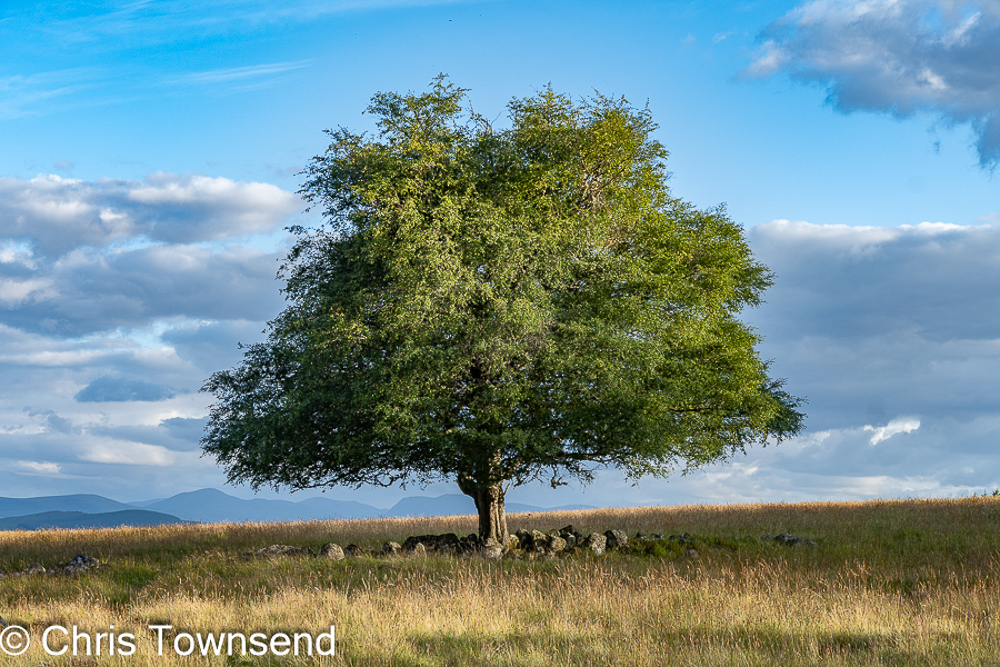
Looking out of my study and kitchen windows I can see a lone birch tree standing in a pile of stones from an old wall in the middle of a big field. I’ve seen that tree every day I’m at home for over thirty years. It really is familiar, a part of my life. I’ve photographed it many times over the years in every season and every type of weather. It is a fine tree. I like it very much. I would be shocked and sad if it was cut down. It wouldn’t cause a ripple in the outside world though. No-one apart from me and my family would know, let alone care.

The birch tree in a storm

Birds perch in it occasionally but it’s not really a tree for wildlife because of its location, in the middle of fields grazed by cows and sheep. It’s rough grazing and there are flowers amongst the grass and butterflies and other insects so it’s not a totally sterile or barren landscape. But any birch seedlings never make it far above ground.

Not far away, also visible from the house, is a thicket of young birches, dense and tangled and thriving. This has grown up in the last twenty years, since the farmer stopped bringing his beasts regularly up the track beside the area and they ate any tree seedlings.

The thicket

The birch thicket isn’t very big, but it is just large enough to go into and feel inside a wood, inside a place that is different to the world outside. In spring and summer it is full of exuberant life. The undergrowth is thick with flowers and grasses, insects buzz, birds sing. This is so different to the solitary birch in its field.

Yet I have never photographed this thicket until doing so for this piece. It doesn’t stand out; it doesn’t fit as an image of natural beauty. Walking round and through the little trees there’s no obvious viewpoint from which to admire them. It looks messy. It is messy. And that’s good as it’s that messiness that is brimming with life. Nature isn’t tidy.

The birch tree in a winter mist

The solitary birch is very photogenic. The shape is pleasingly symmetrical. It stands out against the sky. The Cairngorms form a distant backdrop. It is aesthetically satisfying. That matters in our appreciation of nature and landscape. It’s part of our culture. The Sycamore Gap tree is a perfect example of this. Standing between those lovely curving slopes, solitary and dramatic.

For the health of nature this doesn’t matter at all. The birch thicket is where life is burgeoning. Remover the domestic livestock and young birch would spring up around the lone tree but unless that happens it’s one ageing tree with no nearby offspring and no woodland community around it.

The Sycamore Gap tree is the same. There are no other trees. It will probably regrow, sprouting shoots from the stump. Sycamores are good at that. But it will still be a lone tree unless others join it and if they do the landscape will look different. Ecologically healthier but aesthetically probably not as immediately attractive. I think that is what should happen. If anything positive is to come out of the felling and the surge of emotions it has engendered I hope it is that more people campaign and work for more trees in Sycamore Gap and elsewhere, more messy thickets rich with life. That’s what we need.


Monday, 10 May 2021

The Benefits of the Wild

This piece was written two years ago for Scotland The Big Picture's Think Like A Mountain newsletter, well before Covid-19 arrived. After the lockdowns it seems even more apposite. So many more people have discovered how important nature is to them. If I was writing the piece today there would be many references to the pandemic. As it is, I decided to just mention that in this introduction and leave the piece as written.

The forest path stretched into the distance, walled by the dark green trees. The feeling was calm and placid, almost soporific. Walking was relaxing, effortless. I was barely aware that was what I was doing. My mind was floating through the woods, detached and tranquil. Nature can do that, even in a forest like this, which wasn’t spectacular, awesome, glorious, exciting or any other of the Instagram-essential hyped-up descriptions. Just a pleasant wood with a little path weaving through it. But its effect was magical. I was in another world, far from the problems of the bigger one outside those trees. The walk left me feeling refreshed, revived, and much more able to cope with that often overwhelming and frightening human-made world.

That nature and walking in nature can have such a healthy effect has become widely accepted in recent years, with many studies backing this up. For those of us who’ve revelled in nature and wild places all our lives this isn’t new. It became part of me when I was a child, exploring local woods and fields. It’s something I’ve always known, though it took me many years to realise this was something special and important. Wild places matter for our mental and physical health. They take us away from the frenetic, noisy, confusing world of cities and industry and return us to our true home. Over a hundred years ago John Muir wrote “Thousands of tired, nerve-shaken, over-civilized people are beginning to find out that going to the mountains is going home; that wildness is a necessity; and that mountain parks and reservations are useful not only as fountains of timber and irrigating rivers, but as fountains of life.” This is as true today as it was then and even more urgent as now even fewer people have much contact with nature while our wild places are diminishing even faster than in Muir’s time just as more of us are discovering how important they are.


In the words of Joni Mitchell “you don’t know what you’ve got ‘til it’s gone”. Some of us do know but not enough and it’s important we do everything we can to spread this knowledge and get more people committed to protecting and restoring wild places. We are part of nature. Forgetting this can only lead to disaster.

The peace of wild places, the comfort of nature, can soothe the mind. Physical activity in these places can keep the body healthy. Walking, mountaineering, kayaking, swimming; the actual activity matters less than where it’s carried out. All those who take part in these outdoor pursuits gravitate towards wilder places, and not, I think, just because of their aesthetic qualities but also because the wildness feels right, helps make the physical activity feel appropriate, helps make the experience complete and whole. When I walk through wild places, especially day after day, I feel I belong, I feel part of where I am, the detachment I feel in cities disappears. The physical and mental benefits of wild nature combine to give a feeling of contentment.

It might seem this doesn’t matter to most people. That it’s just a few outdoor lovers and wildlife enthusiasts who are concerned. That this isn’t so was brought home to me during the foot and mouth disaster many years ago. Much of the countryside, including even the wildest places, was closed. Tourism fell away. If people couldn’t leave roads and experience nature, even if only for a stroll or a picnic in a wood or field, they didn’t come. Just looking at the landscape wasn’t enough. They wanted the freedom of being in nature, not just observers of it.

During that sad time I met two walkers from England on the summit of Cairn Toul, deep in the Cairngorms. With access to the English hills still restricted they’d come up here for the freedom of walking in hills that weren’t regulated and controlled, where they could wander at will. Wild places are free places. We need them. “Wildness is a necessity”.

Sunday, 7 March 2021

Landscape, nature, and outdoor activities

Forest regeneration, Ryvoan Pass, Cairngorms

Recently Alex Roddie posted an excellent thought-provoking piece on the TGO website titled Has outdoor culture become too detached from nature?  I’ve been thinking about the relationship between outdoor activities like hillwalking and nature activities like bird watching on and off for many years and this piece stimulated such thoughts. I agree with Alex that detachment from nature is a problem, but I don’t think it’s a recent problem and I think there are signs that it’s decreasing. There’s also the question of defining mountain culture. I don’t think it’s just one thing. I’m not going into that here, however. Maybe in another post.

In his excellent book Our Place (my review here) Mark Cocker writes about the ‘Great Divide’ between landscape protection and nature conservation that began many decades ago. National Parks were seen as being about the first (which may partly explain why biodiversity is poor in many of them) while nature reserves were about the second (though many of these seem more concerned with maintenance of an already depleted environment rather than restoration). This split seems to be echoed by some outdoors people and organisations. Many years ago, I remember a response to a piece I wrote about forest restoration from a walker who said he didn’t want trees because they spoiled the views. And way back in the late 1970s I remember talking to a rock climber who said he didn’t like having to walk to a crag because it was boring, and the ideal climb would start at the roadside so the belayer could sit in the car. He had no interest in nature.

Whilst there were always some mountaineers, walkers and climbers who didn’t think there was a divide between nature and landscape and outdoor activities going right back to John Muir and earlier I think there are more now. Mountaineering, backpacking, and walking books and articles now often include an appreciation of nature as a given. Not that many did in the past. Concern for biodiversity, climate change, and the environment in general has grown throughout my lifetime. Partly this is due to more and more easily accessed information, partly it’s due, sadly, to ongoing degradation and destruction – there’s nothing like seeing a favourite place wrecked by a bulldozed road, windfarm, plantation, or ski resort to make you think about conservation. Guidebooks contain more information on nature than they used to and there are books like the SMC’s Hostile Habitats specifically about nature in the mountains.

I’ve never understood this divide myself, maybe because I started out on the nature side. My first walks in flat coastal Lancashire were to watch birds, look at plants, collect seashells and more. My first outdoor books were not backpacking guides or mountaineering accounts but field guides to birds, animals, and plants. The first piece of outdoor gear I ever owned was a pair of binoculars, which I treasured. When I discovered mountains and hills I didn’t forget the birds and plants, I just had a new world in which to see them.

Reading a natural history guide to the Sierra Nevada on a road walking stretch of the Pacific Crest Trail in 1982

I’ve always liked knowing what things are called and how they relate to each other, how nature and a landscape works. On walks in unfamiliar places a natural history guide was more likely to have a place in my pack than a route guide. Now I don’t think being able to give it a name is needed to appreciate a bird or a tree. Enjoyment and connection can be felt without doing so. I do find being able to do heightens my appreciation and understanding. In the same way I don’t think there’s a ‘right’ way to enjoy the hills or wild places. Walking slowly is not better or worse than walking fast. You can ignore or appreciate nature at any speed and while doing any human-powered activity.

In his piece Alex Roddie writes “One of the most damaging ideas in history is that humans are above nature. But we aren’t. The natural world is more than just a playground or a gym; it’s a home for countless other creatures, and it’s under threat as never before. That includes our mountains.”  I agree. I wrote something similar in my first book, forty-five years ago: “our modern detachment from nature, from the force of which we are a part, our futile attempt to prove ourselves separate from and superior to the ecological system that allows us to live, our view of the world as an enemy to be conquered, and a bottomless treasure chest to be exploited, are the very escapist and selfish attitudes that have led us to the brink of the abyss of annihilation on which we are poised. Re-establishing our place in the natural scheme of evolution and the real world is essential if we are to have a future”.

I feel sad that after all these years my words still apply and that the need to do something about this has grown more urgent. I do hope that we are at a turning point though. Pieces like Alex Roddie’s help and are needed.